Friday, August 21, 2009
Pre-occupation with Youth - Desperate Church Life
Saturday, August 15, 2009
Stuhlmacher on Rom 4:25
Faith in this God is true faith. It genuinely leads to justification. [25] Verse 25 declares why this is so by a formula of confession which was already structured before Paul's call into two clauses that are arranged in Semitic parallelism and oriented on the Hebrew text of Is 53:11f. As it is indicated in Isaiah 53, God delivered Jesus over to his opponents and thus to death on the cross "because of our transgressions (cf. Mk 9;31, 10:33f. par.; 1 Cor 11:23; Rom. 8:32)., and he raised him in recognition of his act of sacrifice "because of our justification". Christ's act of sacrifice on the cross, ordained by God and endorsed as valid by the resurrection, is and remains the legal ground for the justification of all those who, as the "ungodly", believe in the God who revealed himself in Christ. God's salvific righteousness comes to pass in the resurrected Christ from "now' (3:21) until the final judgement. [emphasis mine]
Saturday, August 08, 2009
Hard not to associate A with B
I mean, it will be hard to imagine a Baptist trying to blow up a saloon or a bar. Or a Pentecostal setting on fire a movie house then blowing himself up so he can take down as much people with him.
This post by Andrew Bold here speaks for itself.
Monday, August 03, 2009
In Christ, no parsing needed
Eph 1 (NASB)
In Him we have redemption through His blood, the forgiveness of our trespasses, according to the riches of His grace 8which He lavished on us.
Col 1 (NASB)
13For He rescued us from the domain of darkness, and transferred us to the kingdom of His beloved Son, 14in whom we have redemption, the forgiveness of sins.
I used to try to penetrate deeply in to what those "IN CHRIST" passages mean. In fact it was brought up in one of the discussions here.
Now I do not do that anymore because I believe it has to be understood in its plain sense, it needs no parsing.
Forgiveness is not found anywhere floating in the air but it is found specifically in one location - in the person and work of the Lord Jesus Christ - who has become our righteousness, sanctification and redemption - 1 Cor 1:30. He is God's gift to us - for us. He brings us to Christ so that we may benefit in his work of paying for our sins. Jesus is The Righteous One.
So when we are bothered that we are thoroughly not righteous, we point to Christ in the face of the Law and even in the face of the accuser of the brethren.
These IN CHRIST passages I observe has a way of pushing you to believe - and to believe what? - Precisely the same thing - that IN CHRIST I have righteousness, sanctification and redemption. To confess this is to believe also what the Scripture says - that indeed IN CHRIST we have the forgiveness of our sins who gave himself as ransom for us all.
The other question, is this - am I IN CHRIST? This is one of the reasons why these IN CHRIST passages had a way of mystifying me.
I was told I am in Christ if I believed. This is true but what happens when I doubt if I even believe?
According to Philip Cary in his paper - "Why Luther is not quite Protestant", Luther looked at his baptism when faced with such doubts.
We need to rely on another Scripture that in our Baptism according to God's word - Rom 1:1-6, God has placed us IN CHRIST. That is what happened. God applied Jesus death to us forgiving us of our sins, in that means of grace. The effect of baptism then if God's Word is to be believed, is not confined only at that point when we were baptized but its effect is for the rest of our lives. The forgiveness is all of our sins not just some.
May our hearts always confess, "yes Lord God, IN CHRIST I have your forgiveness of sin, Jesus has already paid it on my behalf". Amen.
Friday, July 24, 2009
Mean meanies of Grace
Acts 2:38
Then Peter said unto them, Repent, and be baptized every one of you in the name of Jesus Christ for the remission of sins, and ye shall receive the gift of the Holy Ghost. For the promise is unto you, and to your children, and to all that are afar off, even as many as the LORD our God shall call.
Calvinists will shout Sovereign Grace, Sovereign Grace! Lutherans will shout Means of Grace, Means of Grace!
When I was a Pentecostal (and was a credo-baptist), I was often asked by converted folk, "Look if I am saved by faith, why do I get baptized, why is this needed? What is this for"? Good question, no?
Guess what my answer was? I answered - well Jesus said you should be baptized so you should be, besides, baptism is showing your commitment to follow Christ. It is a reflection of what has happened in you as a witness to the outside world. Then we would both walk away, but in my head - a niggling thought would still linger - "yeah, so what if I do not get baptized, since it does not do anything and I am saved by faith, that is it, so what is the baptism for"? Really, the reason I gave those folks were so flimsy justification for baptism.
What non-Lutheran Prots think regarding the Lutheran idea of baptism is that a.) it contradicts sola fide, JBFA. ( so they think), b.) how could God be tied to something, some kind of work (so they think)? They observe baptism and even observe the life of the baptized and it seems nothing happened when that baby was being baptized and furthermore, that adult now lives such a sinner, it is hard to believe something happened back there.
Non-Lutheran Prots who believe in the doctrine of sola fide do not really understand the Lutheran concept of sola fide. Yet, they will understand it, if they take the time to put down their preconceived ideas, brazenly look at the Scripture's text and the Lutheran explanation. I was a non-Lutheran Prot too, so it can be done.
I need to quote Larry again here, his experience is worth studying...
If I might put it in a nutshell the best trick the devil has done is to take the means of grace and gloss them over with a coat of ‘white wash works righteousness’, so that grace now looks like, to many, works righteousness. E.g. Infant baptism is the ultimate view of the distribution of real and true grace to someone who can do nothing but RECEIVE it. The devil being a sly general sees, “Oh they only want grace eh.” So he camouflages infant baptism with the errors of Rome so that it looks like works righteousness and tada the Baptist heresy is born. So that now no one in that theology, baptistic, may take advantage of their baptism as a true means of grace. It’s as if they are poor and starving with no money and all they think they have is this heavy white garden block that is just short of junk that can be thrown out (the works righteousness white wash over infant Baptism). The do not realize that what they have under that false doctrine white wash is the golden treasure from heaven. So that when they suffer from hungering and thirsting for a righteousness that is not their own (am I really saved, reborn, elect), they never go to that ‘white washed heavy block’ to realize God has given them the righteousness. If they could but or if others like Lutherans could be scrap a little of the devil’s white wash off of that heavy block and say, “SEE look GOLD not concrete – you have the wealth of heaven on you in your baptism!”
The same thing applies to the real presence issue regarding the Lord’s Supper. The devil’s white wash under the Mass has caused many, including the brilliance of Zwingli and Calvin and their successive followers to no longer see the true gold from heaven that is the very and true body and blood of Christ.
Having now diverted many Christians from the true means of grace by a ‘white wash’ of works righteousness, he now diverts them to false “means of grace” which are not any such things but truly works righteousness and false hopes. The examples vary from denomination to denomination and from church to church but range from alter calls, rededications, praying the prayer of salvation again and again, rebaptism, not the true body and blood of Christ rituals, and general empty “free style” liturgies. These works righteousnesses are glossed over by the devil with a paint of grace.
So that the real means of grace, the Pure Gospel and the Sacraments according to Christ’s institution are white washed with works righteousness white wash; and false means of grace which are really works righteousness are glossed over with ‘grace colored paint’. So that men avoid true grace and go to false grace which is works righteousness!
The devil ALWAYS inverts the Word of God, nothing new under the sun.
Blessings,
Larry
Sunday, July 19, 2009
A brief commercial break
We interrupt our regular programming.
I was about to post again one of Larry's comments but I thought we should interrupt our "celebration" (nope!) of Calvin with a brief ad.
I am the proud Dad of the last girl shown on this Qantas ad. Of course it has been 10 years since, and she has grown mature but I have not stopped being proud of her.
Monday, July 13, 2009
The Mess - is the pot calling the kettle...?
I believe the comment of Larry (who probably one day will blog himself) on the discussion below needs to be displayed here because he gives a challenging critique of the fruits of Calvin's ideas.
Please note that I have Calvinistic friends whom I regard and give brotherly affection. I am featuring Larry's critique here not because I want to be quarrelsome, but because Larry was a former Calvinist himself, I think that counts for something. Then secondly, I am featuring this in the spirit of honest, respectful conversation or dialogue.
Here is what Larry said...
The interesting thing about Calvinism and America and the complaint regarding today’s evangelical church is that many Reformed complain about it, yet don’t really see that Calvinism is it’s root and this, even Pentecostalism is the logical extension of Calvin.Larry continues...
America is practically solely influenced by English Calvinism and all its derivatives, even the Baptist church can trace itself back to Calvin, even Wesley and Arminianism. All those came out of Calvin. The Puritans, staunch Calvinist, if you read them much over time, having thoroughly followed Calvin in disconnecting the Sacraments (look up their “half-way” covenant stuff) over time looked more and more inward and for the “process of conversion”, the ordo salutus. If you read even the highest end Puritans like Jonathan Edwards they spend much paper and ink ferreting out what is real conversion and what is not, I mean nearly everything they wrote…it was obsessive. Children were panicked about “am I elect” and such. A true story of a woman throwing her baby down a well killing it and saying, “Now I know I’m not elect, surely I will go to hell”. What is frightening about that is that she found comfort in knowing she was hell bound over NOT knowing IF she was elect. You see how true hell works, and this kind of terror among many in Calvinism, though not that drastic in doing what she did, is not too few at all. These kind of terrors over election are pretty part and parcel with Calvinist. Hell I nearly on numerous occasions wanted to commit suicide over it, and that is WELL outside of my normal personality – yet the terror is so great and the sacraments according to the Calvinist doctrine (Baptist OR Reformed) allows for no help whatsoever it drives men and women to utter despair. It is EXACTLY as Luther once said that the devil leads men to these great heights to break their necks and fall like he did.
So since the sacraments are unhinged and only signs and seals of a grace elsewhere given in the ordos salutus[sic] one MUST find where? After all what God fearer is going to sleep at night without knowing, “am I saved, elect, reborn”? What else in the entire universe is worth having if you don’t have that! And there, the inward journey begins, back INTO the heart and soul of the sinner to find “the spirit’s” work that “grace elsewhere given” but not in the sacraments. So it is no surprise that men like Wesley and Finney and others arose. It’s the logical progression of Calvin’s sacramental-less theology. And from Finney it is no small leap whatsoever to rank Pentecostalism, health and wealth theology, all sorts of theologies of glory. It starts with Calvin’s ever so seemingly slight error on the sacraments, just a half a degree off back in his time, but then 500 years later we have Finney, Wesley, Benny Hinn, etc… That’s what inward turning produces at length. When the “sacraments” only signify the grace ELSEWHERE given, that elsewhere becomes the search, “where is it”, that’s what the end product becomes. Hiding the Word of God, actual grace given in the water, bread and wine so that one’s theology in essences says, “Nope, God’s not here for you, elsewhere”, falsely send you on this hide and seek searching, “Then where is God’s salvation for me”, and so presto ‘theologies of glory’ of ALL sorts. Calvinist rail against Arminians, but the truth be known Arminians are their creation, their doctrinal children. If faith doesn’t come as a gift in the sacraments, and grace is conferred elsewhere, then these “ex-calvinist” become Arminian are simply try to put back into concrete something they can hold on to. So they move faith to “man’s decision”, it’s seemingly more concrete than Calvin’s vague ordos salutus.Dawn K, carries the thoughts of our conversation further in her musings.
Final point to where this all leads concerning American religion and its father Calvin. American’s Christian spectrum, in the widest sense is in a deplorable state. From liberalism to conservativism[sic] from Methodist, Baptist, Presby., Reformed, you name it – all the grandchildren of Calvin. America’s religion is now like and worse than Medieval Rome ever was. And we all consider the Papacy as thoroughly antichristic, but America is in a sense worse. It took the errors via Rome nearly 1500 years to produce a situation so bad that it took an evangelist like Luther to be used reform. Yet it has taken Calvin’s errors 500 year to manifest nearly the same level if not worse antichristic characters.
Just to let you know that my blog programming will be sparse in the days to come, I will be busy writing on my research etc. etc., blah blah blah. Or to quote Todd Bentley, the fake healer - bam, bam, bam.
BTW, there are lots of guests coming from twitter. Nice for you guys to visit but how did you hear about this post? Leave a comment and let us know.
Wednesday, July 08, 2009
Calvin's 500th
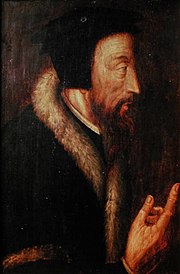
This Friday is Calvin's 500th birthday.
Let us face it. In the world of Protestantdom, we are surrounded and circled around by Calvinists and those he influenced. In my country of birth, Lutherans are not even a blip in the radar. You won't find us much in the city. You will find us in the mountains and remote rural places but not in the urban areas. Luther is only known to handful of Protestant pastors there. If an Evangelical pastor there knows Luther, you can bet he is pretty educated.
There are quite a few wise words that Calvin said that I like. I stress the few (LOL).
Have you read his prayers? I certainly come out impressed by his spirituality whenever I read them.
I was reminded of him when I visited Ichabod who featured a couple of things he said regarding the sacraments in connection to Enthusiasm.
Here is an example from Calvin's Institutes:
We must not suppose that there is some latent virtue inherent in the sacraments by which they, in themselves, confer the gifts of the Holy Spirit upon us, in the same way in which wine is drunk out of a cup, since the only office divinely assigned them is to attest and ratify the benevolence of the Lord towards us; and they avail no farther than accompanied by the Holy Spirit to open our minds and hearts, and make us capable of receiving this testimony, in which various distinguished graces are clearly manifested…They [the sacraments] do not of themselves bestow any grace, but they announce and manifest it, and, like earnests and badges, give a ratification of the gifts which the divine liberality has bestowed upon us.
What did Calvin do in the above quote? He weakened the connection of the Sacraments with the HS. In short, for Calvin, the Sacraments may or may not be accompanied by the HS. For him, there is no guarantee that the HS will accompany the Sacraments for sure, the HS is detached from the Sacraments. I have several theories as to what might be going on in his psyche that led him to say this stuff but that is for another post.
What then is the effect of this detachment or lack of guarantee that the HS is with the Sacraments? You cannot look to it. Calvin's ambeguity has a negative effect on the believer in that he becomes at a loss as to where God's promises are located. He no longer has a guarantee that when he goes there, God will meet him there. Hence, the believer may have to look for a zap from above, and they often do, ergo, Enthusiasm.
At least with Zwingli, it was much better, at least with him, you knew he said the Sacraments were mere symbols. You knew where he stood, and he was wrong. Calvin's vague position I believe has led to the chaos we see in Evangelicalism. This uncertainty as to where the HS works and what He uses to supply what God demands (faith) is like being in a ship that has lost its rudder.
Contrast the above with what the BoC on FC, SD XI says about the matter:
Furthermore, the declaration in John 6:44 is right and true, "No one can come to Me unless the Father who sent Me draws him."However, the Father will not do this without means, but hasordained His Word and Sacraments for this purpose as ordinarymeans and instruments. It is not the will of the Father or ofthe Son that a person should not hear or should despise thepreaching of His Word and wait for the drawing of the Fatherwithout the Word and Sacraments. For the Father draws indeed by the power of His Holy Spirit. However, He works according to His usual way. He works by the hearing of His holy, divine Word. Every poor sinner should therefore attend to the Word, hear it attentively, and not doubt the Father's drawing. For the HolySpirit will be with His Word in His power, and will work by it.That is the Father's drawing. (paragraphs 75-77)
Notice how the BoC leaves nothing uncertain, notice how boldly it asserts the HS is with the Word and the Sacraments. What is the effect of this to the struggling Christian who is in doubt if he has faith? He is assured that he can go to the Word and Sacraments where his faith may be strengthened, increased - he has a guarantee that the HS will meet him there. When he goes to the Word, he is certain, it is God speaking to him. When he goes to the Supper, he is certain, Jesus is pronouncing and giving evidence that his sins have been paid for. Assurance.
Saturday, July 04, 2009
Same same but different
This reminded me of what Steve M of The Old Adam Lives posted on how outsiders view Lutherites.
Evangelicals indeed will find Lutherdudes a "bit religious" for their taste. Considering those rituals, liturgy and stuff, they might even conclude in their ignorance that the Lutherdudes are RCs.
No, not so. So if any non-Lutheran is reading this and having that impression, let me explain by quoting here my comments to Steve M's post.
The problem with people observing Lutherans is that they hear the same words we speak and think we mean the same things as the RCs.
No.
We sound and look the same as the RC but we do not mean the same things when we use the same words. We just look the same, but we are not the same.
We are not the same because we do not mean the same things when we use the words found in our liturgy. The words strike the Lutheran differently when they hit the Lutheran’s ears.
The difference is that those words in the liturgy are wrapped up or are interpreted by the central tenet of Biblical Christianity: justification by grace alone, through faith alone, in Christ alone.
Our liturgy uses the same words but the words mean different things, so" same same but different".
Friday, June 26, 2009
Look ma, no hands - Filipina pilot
You may not realize this but there are Filipinos that are ashamed to admit they are Filipinos.
Jessica is not one of them and she even wears the Filipina national dress - the Maria Clara when she does her motivational speaking.
I am putting this up here because Jessica, in one interview, attributed her abilities to do these sort of difficult things (let's face it, living life with out arms is a bit difficult and challenging, no?) because of the nature of being a Filipino. In a way I kinda believe that because every Filipino that is born has a twin, called sacrifice/suffering, poverty.
Filipinos are known for being friendly, yet they know that the world and life are not as friendly towards them.
I used to work for Unisys. One time they sent me to Pasadena, California (USA) to work with the engineers there. The engineering manager was so thrilled to meet me and excitedly said - oh we have a Filipina engineer, I want you to meet her. So I did, I went to where her office was and greeted her with some Tagalog words. She spoke back in Spanish saying she did not know any Tagalog. What a load of b.s. Her skin was so brown, her nose was so flat and she wasn't that tall either. Even her name was a dead give away, like Ramos, Garcia or Reyes, one of the famous ones. Her attitude of shame epitomizes the result of colonization. The colonizers taught us we were no good, we were good only to be slaves, for labor. The colonizers have left - or have they really? Yet one thing for sure remains, their cultural imperialism still trickles down to many generations.
So pardon me for giving a shout for Jessica.
We have a saying "Filipino ka, sabihin mo", "you are Filipino, say so".
I am saying so.
Wednesday, June 17, 2009
Theory of Defection
It is no longer strange to hear some pastor from here or there defecting to Rome or Constantinople.
61] This, now, is the article which must ever be and remain in operation. For creation we have received; redemption, too, is finished But the Holy Ghost carries on His work without ceasing to the last day. And for that purpose He has appointed a congregation upon earth by which He speaks and does everything. 62] For He has not yet brought together all His Christian Church nor dispensed forgiveness. Therefore we believe in Him who through the Word daily brings us into the fellowship of this Christian Church, and through the same Word and the forgiveness of sins bestows, increases, and strengthens faith, in order that when He has accomplished it all, and we abide therein, and die to the world and to all evil, He may finally make us perfectly and forever holy; which now we expect in faith through the Word.---66] These articles of the Creed, therefore, divide and separate us Christians from all other people upon earth. For all outside of Christianity, whether heathen, Turks, Jews, or false Christians and hypocrites, although they believe in, and worship, only one true God, yet know not what His mind towards them is, and cannot expect any love or blessing from Him; therefore they abide in eternal wrath and damnation. For they have not the Lord Christ, and, besides, are not illumined and favored by any gifts of the Holy Ghost.
Saturday, June 13, 2009
Monica tells...
Calvinists to repent.
I got this from Fighting for the Faith radio.
Don't laugh, pretty soon she may even be calling us too to repent of our ideas about pure doctrine and right theology.
But the way things are going, luckily she does not know we even exist, we are not even a blip in her radar.
Monday, June 08, 2009
The Ghost of Rogers/McKim
What is the Rogers/McKim Proposal?
This proposal was formulated by two Presbyterian theologians Drs. Jack Rogers and Donald McKim and is found in their book The Authority and Interpretation of the Bible: An Historical Approach.
In a nutshell here are their theses, and I summarize these from the works of John D. Woodbridge's, Biblical Authority, a Critique of the Rogers/McKim Proposal and in his essay at Hermeneutics, Authority and Canon, edited by D. A. Carson and himself.
- That the Bible is infallible for faith and practice but may contain "technical mistakes".
- That the Bible is infallible in accomplishing its saving purpose, but not infallible for matters such as history, science, and geography.
- The purpose of God's written Word is to reveal salvation truth about Christ, not for technically correct information about the world.
- Small errors made by the Bible authors do not detract from the Bible's authority because they are not associated to its form or words but with Christ and his salvation message to which they point.
- That the above are the central beliefs of the Church.
- That the present view on inerrancy only began in late 16th century.
Of course, I reject the above.
I am not able to reply in so many words so I will just use some Augustine quotes found in the above works also of Woodbridge:
- I have learned to yield this respect and honour only to the canonical books of Scripture: of these alone do I most firmly believe that the authors were completely free from error.
- Therefore everything written in Scripture must be believed absolutely.
Wednesday, June 03, 2009
Diligent use of means
My purpose for the discussion in the last few posts had one main point, to bring confidence in the Scripture; that it is God's Word (it does not contain it, but IS it), that by virtue of it being God inspired, it cannot mislead in any other way even in the minute or seemingly immaterial detail. For if it did, it will put into question the other parts. Of course, I am saying this because I believe the truths of Scripture are interconnected, that is of course a premise I am operating on. If this premise is not true, then of course, you can have an erroneous Scripture. I do not allow for this because I believe all of God's words are not wasted words, they all point to Christ, yes, even that obscure passage in Nahum.
So, coming back to my point that faith being so slippery and easily killed (for the devil wants that faith destroyed), and adding the fact that it is a gift of God such that you cannot create it within yourself, the BoC authors direct the reader to Scripture and the listening of it, specially at a time when a believer is doubting his future destiny.
From SD XI.
76] Moreover, the declaration, John 6:44, that no one can come to Christ except the Father draw him, is right and true. However, the Father will not do this without means, but has ordained for this purpose His Word and Sacraments as ordinary means and instruments; and it is the will neither of the Father nor of the Son that a man should not hear or should despise the preaching of His Word, and wait for the drawing of the Father without the Word and Sacraments. For the Father draws indeed by the power of His Holy Ghost, however, according to His usual order [the order decreed and instituted by Himself], by the hearing of His holy, divine Word, as with a net, by which the elect are plucked from the jaws of the devil. 77] Every poor sinner should therefore repair thereto [to holy preaching], hear it attentively, and not doubt the drawing of the Father. For the Holy Ghost will be with His Word in His power, and work by it; and that is the drawing of the Father.
,
Wednesday, May 27, 2009
God's condescension and perspicuity of Scripture
Critics think that is puting God under the level of man. I think these people think I am very arrogant to suggest I can understand Scripture...
Well to quote Muhammad Ali... it is hard to be humble, when you are as great as I am. (LOL)
I hope you got a laugh at that.
Unfortunately that misses the point, because it is God who is putting himself, condescending to my level. In fact, I find the thought of God's condescension too marvellous for words. Here is God being kind enough to make me understand him. I do not understand all but I do understand some. He could have left me in the dark, but he did not and to demonstrate that love, he even sent his Son to become man, like me (you) to demonstrate what he is. Topping it all his Son even took my sins. If this condescension does not make you wanna shout, I don't know what will.
So I picked up my copy of J. T. Mueller's Christian Dogmatics who is helpful in in this regard and so on p.138. I quote (with my insertions) ...
When we say that the Holy Scripture is perspicuous, or clear, we mean that it sets forth all doctrines of salvation in words so simple and plain that they can be understood by all persons of average intelligence. The Lutheran dogmatician Baier expresses this thought as follows: "Any man acquainted with the language, possesed of a common judgement, and paying due attention to the words may learn the true sense of the words...and embrace the fundamental doctrines"...
....
Whoever, therefore, rejects the perspicuity of the Bible (papists, enthusiasts, modern rationalistic theologians) must also reject the basic truth that Scripture is the only principium cognoscendi [principle of knowing...God], thus compelling the Christian believer to base his faith upon the human expositions either of the Church or of the individual Bible scholars.
Keeping in mind the Holy Scripture is a clear book, the Christian exegete must scrupulously refrain from foisting upon its sacred text his own subjective views (eisegesis) and regard it as his sole function to exhibit the true meaning of God's clear Word (exegesis: the leading forth of the sense of Scripture); in other words, he must allow Scripture to interpret itself. Negatively the function of the Christian exegete may be described as the removal of all textual difficulties by proper grammatical instruction and of all misinterpretations by erring expositors; positively, as the exhibition of the true sense of the text in the light of its context and parallel passages.
Hence a true Christian exegete must possess the following qualifications:
a.) He must regard the whole Bible as the inerrant Word of God;
b.) He must treat Holy Scripture as a book which is clear in itself;
c.) He must conscientiously point out the real sense of the text;
d.) He must be able to refute the erroneous human opinions which false teachers or misguided orthodox theologians have foisted upon the text.
The last bit is classic.
Monday, May 25, 2009
The only wise alternative
Over on the discussion of 24 and the discussion on the inerrant Bible, it occured to me that some folk do not think that their Christian faith will crumble in places where the Bible might be wrong.
Over and over I heard and was told - this and that are not essential to the faith.
I would say they have a strong system of belief and may be wider on the base...
Now, the Scripture says that Jesus rose from the dead.
My question is, if the Bible could have been wrong in some part of it, how could it not be wrong on this part - Jesus' rising from the dead? If it were possible for Scripture to be wrong in spot X, could it not be wrong in spot Y? What special pleading should one give to it?
Just remember today it is Scripture that testifies of Christ's rising from the dead. We do not have the apostles with us, only what they wrote and claim to have seen and declared.
I cannot be satisfied with the idea of the NT scholar Bultmann who saw Scripture as myth but existentially says that yes, Jesus did rise from the dead, in the sense that he rises in people's heart, that is where he rises. I think Bultmann still considered himself to be a Christian because of this.
Unlike my interlocutors, my Christian faith will crumble if Jesus did not rise from the dead as the Scripture testifies. Unlike them, I cannot allow Scripture in to be wrong in one place but right on this one. For me, if Scripture was wrong at one point, how could it be right on another? Its reliability as the Word of God or Word from God to me is in question. It just does not make it reliable and must be un-inspired. It is just like saying, God nevertheless inspires what is a lie or falsehood. If so, then why can he not let you find Christ by reading Aesop's Fables, anyway he can use imperfect means to work through perfectly, correct?
Congratulations.
Unfortunately my Christian faith will go down to the dogs. In fact if Scripture is wrong in one place, it could be wrong here, and guess what is the other alternative...?
IMHO Atheism, that is the only logical and wise alternative.
One thing for sure, it seems, my sparring partners and I do not have the same idea of what it means to have a Means of Grace.
Friday, May 22, 2009
Oiler
Wednesday, May 20, 2009
What Godel has to say in all of this
My last recent posts on 24 have attracted some form of controversy. So what else is new?
On thing emerges in the heated discussions, and that is, the role of science in reading the Bible. It boils down to authority and which one has priority. Does one give authority to the language of the Bible, or does one give authority to scientific empirical pronouncements? To whichever we give priority, that one therefore has authority. The two are connected.
There is also a corollary point that has been missed in the discussions, and that people are not aware of the philosophical critiques that philosophers have been making against science (falsely so called). If people only knew, they would not trust so much in it.
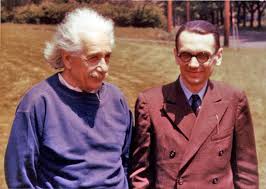
So, I turn to my patron (whose picture you see in my profile) - Godel and try to find out what he thought about science and scientific pronouncements....
Here is what he said:
- I do not believe in (natural) science.
- I don’t think the brain came in the Darwinian manner. In fact, it is disprovable. Simple mechanism can’t yield the brain. I think the basic elements of the universe are simple. Life force is a primitive element of the universe and it obeys certain laws of action. These laws are not simple, and they are not mechanical.
In both counts, my bias says Godel was correct, most specially in #1. The wise scientist should be the first to admit the limitations of his craft.
Besides, we are not allowed to believe in anything and in anyone, John 11:25-26.
Friday, May 15, 2009
On Inerrancy
----
The "attack" on the biblical doctrine of inerrancy is inextricably linked to the biblical doctrine of inspiration. Inspiration as "theopneustos", i.e. properly and authentically understood as the DIVINE union between "form" and "content", "medium" and "concept" is necessary to safeguard the OBJECTIVITY of the TRUTH of Holy Scripture.
Denial of inerrancy IS a result of the SUBJECTIVE approach to the Word of God. The hermeneutical model in this case is that of the SINNER standing over the Word of God as the interpreter, and hence he assumes and remains in the position of "subject". The proper hermeneutical model is that of the Word of God standing over the sinner as the interpreter. In other words, we are the object to be "interpreted" by the Word of God as the subject.
In this role reversal, two implications emerges:
1. The *words* themselves as bearers of the divine revelation is the LITERAL truth, in contrast to functioning as signs only. The "vis significandi" (mode of signification) is the "res" (reality) itself. Thus, the meaning of sola Scriptura is precisely the self-sufficiency of the EXTERNAL Word. The movement here is an incarnated top-to-bottom pattern, consistent with the formal claim that the Holy Scripture is the Word of GOD.
2. "Faith comes by hearing the Word of God". Faith is not external to the Word of God, i.e. apart from the Word of God. But faith is CREATED by the Word of God. Inerrancy is a faith claim, made on the basis of the witness and testimony of the Holy Scripture itself. As such, it (i.e. inerrancy) can only be grasped by faith alone (sola fide). By extension, the infallibility (authority) and efficacy (power) of the Holy Scripture are grasped by faith alone. The Word as the legal authority (Scripture alone) constitutes the co-relate of the Word as the evangelical power (faith alone). That is to say, faith is not a "discrete" entity consequent on "understanding" as an evaluative tool. Faith is not a posteriori (subsequent) to nor identical with an explicit analytic conclusion. It is an impossible scenario because of the "bondage of the will". But faith is simply the implicit synthetic presupposition to the Word of God. That is to say, faith means being "reclaimed" by the Word of God itself, according to *its* own judgment (spiritual-deductive method), and not vice-versa, i.e. faith means "reclaiming" the Word of God according to its own judgment (empirical-inductive method). Ultimately, our faith is not dependent on our understanding. But our understanding is dependent on our faith which comes extra nos --- an alien faith as a total gift = alien righteousness. Faith and understanding are simultaneous, not sequential. faith IMPLIES understanding. And faith as a total gift co-exists (simultaneously) with unbelief as a total condition: simul iustus et peccator. There is no middle ground approach to Scripture. Our bondage to sin simply and by default disallows a neutral approach. Both the regenerate and unregenerate encounter Scripture either in a mode of belief or unbelief.
If one wishes to speak of movement, then the movement is not the progression of understanding towards faith, but the progression of faith towards understanding.
"Credo ut intelligam".
Seen from this perspective, denial of inerrancy is simply the denial that Holy Scripture IS the Word of God. Instead, Holy Scripture becomes the means by which we *respond* to God's "self-disclosure" in the course of the divine-human encounter - the movement here reverses the pattern of Divine Revelation and Incarnation, i.e. it is bottom-up, a spiritual ascent according a "ladder scheme". But this produces only subjectivism, i.e. the individual-mystic type or communal-academic type, etc.
Ultimately, scholarly consensus (e.g. science), ecclesial tradition (e.g. magisterium), is elevated into a plus sign alongside Holy Scripture. Denial of inerrancy, to be precise, is a denial that the Word of God is the self-sufficient source of truth.
In short, the denial of inerrancy is BOTH a denial (incipient or full-blown) of sola Scriptura and sola fide.
11:57 PM
Tuesday, May 12, 2009
Antinoms
A few years ago, I read of a confessional pastor spoke of how he normally behaves when he is in a gathering where some Babtists[my sic] and non-denom ministers are around.
He said he would purposely drink liquor in front of them.
Now we all know they do not drink, don't smoke, don't cuss, don't go to movies and just all day listen to Christian radio and watch Christian TV, their friends are Christians and their barbers are Christians and even their pets are Christians too.
Please note, now that I know what Pietism is, it really sucks. No kidding, it makes people Pharisees.
However Rom 14:21 came to mind while I was reading this guy's "testimony".
I thought his comment to be asinine.
Then I am reminded of the T-Shirt with the words "weak on sanctification".
Hang on, there seems to be a reversal here. What duh?
I thought that repentance's fruit is being so sorry you are a sinner I thought it should produce shame rather than pride.
That T-shirt seems to say "shame on you Pietists, Pharisees, hypocrites, look at me, I am such a lousy no good sinner, ... and I am proud of it too".
Antinomians suck too.