Definitely Calvinists are not Roman Catholics. That is something I think they are proud about. I suggest they are not even catholics (note that Romanism started 600AD roughly, all Christians before that were catholics - universal), and I suggest that is not something to be proud about. In fact that is something one should worry about (if one is a Calvinist).
Let me explain.
Well, if we take a typical Calvinist, we assume he would subscribe to the T.U.L.I.P. principle and would be an adamant promoter of Limited Atonement(LA). Here is the problem - the Nicene Creed.
Now I know Reformed people claim to subscribe to the Nicene Creed, but they do not really know what that implies. I find this specially true for Baptistic Calvinists. As typical I have found them to put their own spin on what the Nicene Creed. Case in point, the Nicene Fathers were not re-baptizers - remember the line " we believe in ONE baptism, for the forgiveness of sin"? A Baptistic Calvinists can not affirm that, since if you were baptized as a baby, you will be re-baptized by them once more, so right there Calvinists of Baptistic bent are out of catholicism.
Yet there is more and so I come now to their affirmation of LA. In the Nicene Creed we have one line which Lutherans affirm - on Jesus we confess - "who for us men, and for our salvation, came down from heaven, and was incarnate by the Holy Spirit of the Virgin Mary, and was made man;"
The phrase "who for us men" - means all of humanity that was how the Nicenes understood that phrase, so if you believe in LA, you can not affirm the Nicene Creed - for LA says that Jesus did not die for the whole human race, he only died for the elect - which is of course only a subset of the human race.
One has to really warp this passage of the Nicene Creed if confession to it and affirmation of LA is to be maintained. The two are incompatible.
So a question , if Jesus did not die for the whole world - that means he did not die for all men, then what happened in the incarnation? That is, we can ask this question - when Jesus became man, did Jesus leave behind the humanity of the non-elect - since after all according to LA, he was not meant to die for them anyway so did Jesus assume the humanity of these people whom he would not die for in the first place? No Calvinists I have asked dared answer this question, all I hear are just evasions. Clearly in the Scripture it says - he tasted death for every man - Heb 2:9.
Calvinists and UOJ are alike - and here is their fallacy - they conflate the Atonement with Justification. They both think that when one is Atoned for, one is automatically Justified as well.
As far as I know, only Lutherans who believe in Justification By Faith Alone, are the ones who make this distinction between Atonement and Justification properly and mediated by the Means of Grace.

Showing posts with label calvinism. Show all posts
Showing posts with label calvinism. Show all posts
Wednesday, April 22, 2015


Wednesday, November 13, 2013
Be sure to tell Linden and Mueller about this
Dr. Ichabod reported that so called LutherQuest forum (WaltheQuest), a certain Linden responding to my characterisation that UOJers are like Calvinists who lump Atonement and Justification as the same event. You can read about it here..
Franz Linden remarked:
LPC: Well if Linden wants to be technical, of course to them the Atonement and Justification can be made to be different events but that distinction is artificial. For in UOJ doctrine, UOJers practically or effectively make them One and the same thing. Why do I say that? It is because they teach that when Jesus died on the Cross and rose again, which is the whole of the Atonement, they teach that right there and then, the whole world has been declared righteous already. They do this by logic and out of context extraction of Scriptural verses. Do I need to quote LC-MS Brief Statement 1932 Article 17b again? You find that it has been quoted to death in this blog.
Just ask the UOJer when did God declare the sinner righteous already? That would be a surprise if they point out a Scripture that does not involve Romans 4:25,which again has been thoroughly dealt with in this blog.
--------
It is nice to be quoted disrespectfully by your enemies. Dr. Ichabod reported that at WaltherQuest another UOJ fanatic objected to my accusation of their Calvinism in treating the Atonement and Justification as co-equal and categorically the same and you can read it here.
Mueller had this to say:
LPC: What is Mueller saying? He is saying that I do not have to abandon the truth that Calvinists teach. What is this truth we may ask? Well, it is the truth that as UOJers they agree with the Calvinists that the Atonement and Justification are co-equal and equivalent categories only the UOJer and Calvinists arrive at different conclusions depending on where that interchange of categories lead them. Yet make no mistake, this UOJ Lutherans admit that the Atonement and Justification are co-equal and equivalent categories.
Folks, when you equate the Atonement with Justification you can go either of two ways which I have elaborated before and have been reported by Dr. Ichabod. You can arrive at only two options:
a.) Seeing that the Atonement and Justification are assumed to be co-equal interchangeable categories, and seeing that Justification is only for a few, you can pull Justification to the left towards the Atonement since they are the same; thus you conclude that the Atonement is only for some, hence - Limited Atonement. What is the L in TULIP of the Calvinists? That one - Limited Atonement.
b.) Seeing that the Atonement and Justification are assumed to be co-equal interchangeable categories, and seeing that the Atonement is for all, you can pull Atonement to the right towards Justification since they are the same; thus you conclude that Justification is for all irrespective of faith, or irrelevant to faith since Atonement happened without it. Hence Universal Objective Justification - UOJ.
Item b.) was the conclusion of Samuel Huber, a Calvinist turned Lutheran in the 16th century. This was his conclusion. Huber never abandoned the categories he was accustomed as a Calvinists even though he became Lutheran. He was still operating in its philosophy. Folks if you think that Calvinism is just TULIP you are wrong, it is a philosophical framework and all its roots have to be abandoned if you become Lutheran or you will wind up in a lot more mess, just look at Huber's fate.
The Reformed, allows reason, rationalisation or deduction quite a leverage in their method of theology. Hear what the Westminster Confession says I.VI.
The same is true with Halle Pietists descendants we call UOJers.
Franz Linden remarked:
This is nonsense! UOJ does not treat the atonement with justification as one and the same event. The atonement was necessary for the justification to take place. They aren't the same event, but they necessarily go together, like heads and tails on a coin.
It is the deniers of UOJ that are the Calvinists, because they drive a wedge between the atonement and justification, trying to separate heads from tails, as it were. They give a passing nod to the atonement, but the thing they really crave is justification, as though it could be obtained for us in any other way than the atonement that was made for the sins of all on the cross.
If you ask them how they can be certain that their sins are forgiven by God and that they stand justified, what answer can they give? They can't point to the cross, because they have already debased that act by their theology that so as to deny that it is a guarantee of their justification. Instead, they point to the Means of Grace, as if the Means of Grace do anything other than deliver to the sinner the very same forgiveness that was obtained by Christ at the cross for the sins of all.
This is Calvinist theology. It's been repudiated again and again by faithful preachers of the Gospel. Alas, it must continue to be repudiated until the end of time. Sometimes I wonder if Calvin might not be the AntiChrist. He's got almost as many people believing the same lie as the papacy.
LPC: Well if Linden wants to be technical, of course to them the Atonement and Justification can be made to be different events but that distinction is artificial. For in UOJ doctrine, UOJers practically or effectively make them One and the same thing. Why do I say that? It is because they teach that when Jesus died on the Cross and rose again, which is the whole of the Atonement, they teach that right there and then, the whole world has been declared righteous already. They do this by logic and out of context extraction of Scriptural verses. Do I need to quote LC-MS Brief Statement 1932 Article 17b again? You find that it has been quoted to death in this blog.
Just ask the UOJer when did God declare the sinner righteous already? That would be a surprise if they point out a Scripture that does not involve Romans 4:25,which again has been thoroughly dealt with in this blog.
--------
It is nice to be quoted disrespectfully by your enemies. Dr. Ichabod reported that at WaltherQuest another UOJ fanatic objected to my accusation of their Calvinism in treating the Atonement and Justification as co-equal and categorically the same and you can read it here.
Mueller had this to say:
I'm curious, Brett. You quoted this guy Cruz. Why? I had never heard of him before and now it appears that he was trained as a Calvinist. So why are you quoting a crypto-Calvinist to attack the Lutheran doctrine? What's even worse is that this guy criticizes us orthodox Lutherans for agreeing with Calvinists on the intensive perfection of the vicarious atonement! So he thinks that as a "Lutheran" he has to abandon, not only the errors of Calvinism, but the truth they teach as well!
LPC: What is Mueller saying? He is saying that I do not have to abandon the truth that Calvinists teach. What is this truth we may ask? Well, it is the truth that as UOJers they agree with the Calvinists that the Atonement and Justification are co-equal and equivalent categories only the UOJer and Calvinists arrive at different conclusions depending on where that interchange of categories lead them. Yet make no mistake, this UOJ Lutherans admit that the Atonement and Justification are co-equal and equivalent categories.
Folks, when you equate the Atonement with Justification you can go either of two ways which I have elaborated before and have been reported by Dr. Ichabod. You can arrive at only two options:
a.) Seeing that the Atonement and Justification are assumed to be co-equal interchangeable categories, and seeing that Justification is only for a few, you can pull Justification to the left towards the Atonement since they are the same; thus you conclude that the Atonement is only for some, hence - Limited Atonement. What is the L in TULIP of the Calvinists? That one - Limited Atonement.
b.) Seeing that the Atonement and Justification are assumed to be co-equal interchangeable categories, and seeing that the Atonement is for all, you can pull Atonement to the right towards Justification since they are the same; thus you conclude that Justification is for all irrespective of faith, or irrelevant to faith since Atonement happened without it. Hence Universal Objective Justification - UOJ.
Item b.) was the conclusion of Samuel Huber, a Calvinist turned Lutheran in the 16th century. This was his conclusion. Huber never abandoned the categories he was accustomed as a Calvinists even though he became Lutheran. He was still operating in its philosophy. Folks if you think that Calvinism is just TULIP you are wrong, it is a philosophical framework and all its roots have to be abandoned if you become Lutheran or you will wind up in a lot more mess, just look at Huber's fate.
The Reformed, allows reason, rationalisation or deduction quite a leverage in their method of theology. Hear what the Westminster Confession says I.VI.
The whole counsel of God concerning all things necessary for His own glory, man's salvation, faith and life, is either expressly set down in Scripture, or by good and necessary consequence may be deduced from ScriptureYou will notice that things that are not expressly set down in Scripture but can be so called "good and necessary consequence may be deduced from Scripture" is allowed in their theological method. Rationalisation carries some currency with the Reformed.
The same is true with Halle Pietists descendants we call UOJers.
Saturday, November 19, 2011
Why ex-Calvinists fall for Walther
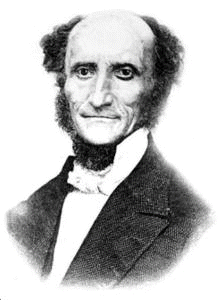 One will notice that ex-Calvinists becoming Lutheran get attracted to C. F. W. Walther.
Why is that the case?
Because most ex-Calvinists becoming Lutherans had the sad experience of being burnt by Calvinists teachings. You can read about their testimonies in the Internet. However, in their excitement to hurriedly know Lutheranism, rather than scrutinising the Book of Concord and going through the Scriptures evaluating if the Confession complies with Scripture, they are coached instead to read C F Dubya's works. The light starts to burn specially bright when they get to read how C F Dubya hated Calvinism.
Calvinism is not just confined to TULIP, but it is a whole world view, a paradigm, a spirit of doing theology. It is no mystery but it is well documented in history books that Lutherans have had issues with Calvinists as well as Zwinglians alike.
Where I came from, we have a funny saying, it is not the cops who hate thieves, but fellow thieves themselves.
Of course, when Lutherans read of Walther's critique of Calvinism, the Lutheran hears him singing their refrain. Walther did not like Calvinism, but his paradigm in collapsing atonement with justification and in his belief in unconditional election, makes him a psychological Calvinist himself. What is a psychological Calvinist? It is someone who operates in Calvinistic paradigm without realising or being conscious of it.
Unfortunately, only a few well educated and astute American Lutherans can see and recognise this in Walther. Those that protests and who point this out are ganged up, bullied and hurriedly shut up.
My sincere advice for former Calvinists or anyone from another denomination studying Lutheran theology, do not go to the works of the Lutheran Fathers first, rather go to the Book of Concord. Read it with your Bible open, read it critically and match what it says with Scripture because if you don't you will be floating in the air, still a Christian, but without a confession.
Saturday, April 24, 2010
Some Tips to the Calvinist Becoming Lutheran
 If you were like me, I was a Charismaniac Calvinistic Evangelical - who had no confession. Deep down inside I knew the problem was this - what should I confess? Because frankly, my confession at that time came from the kitchen. It did not come from the study room.
If you are one of those who walked the same path as I did, here are some tips for the trip, based on my experience.
Don't start off reading some Lutheran theologian like Walther and Pieper. Not that they do not have useful things to say, and not that one can not learn from them, but the issue for you is not what this or that theologian said. Because at the end of the day, you will not be signing your name on the books they have written. At the end of the day, you will have to sign your name to a confessional statement.
I know, I know, some give you the impression that Walther's and Pieper's books etc are part of the BoC, and they appear as if they have signed thier names on the Synodical Father's books. But let us be honest, their books are not part of the Book of Concord.
Most Calvinists who turn Lutheran almost invariably become a fan of the Synodical Fathers, they get loved and get considered to be their hero. For after all why would a Calvinist read a Lutheran theologian if in the first place, he/she did not have anything already bothering the conscience? Mind you these Fathers do have a lot to say about the perils of Calvinistic theology. They pinpoint well the ills of Calvinism. Saying they are anti-Calvinists is an under statement. So for a Calvinist who is already sad about the uncertainty brought about by that theology, reading the Fathers seems like having a liberator releasing you from the jail of mental anguish, and depression, the misery induced by uncertainty . Their reputation of being anti-Calvinists are so strong amongst (what is called - repeat-after-me) Lutherans that a Lutheran questioning these Fathers is immediately branded - guess what - a Calvinists! (I wanted to say I laugh my ___ off, but this blog is rated G).
There was a time when I was bothering more with some books other than the BoC, finally I slapped myself in the head and I said - you must go through the process. The process is the BoC first! Is the Lutheran confession Biblical? That is the question on the table. I said to myself I have no right reading this or that book if I have not answered the question about the BoC. That is why today I do not have lots of books authored by Lutheran theologians. I got delayed by the BoC. I have a few but not a lot.
So as you read and listen to say Issues Etc. never forget to take the Bible in your left hand and take the BoC on your right. Then start scrutinizing what the BoC says compared to Scripture. Spend time doing that. For my case I went to the heart of the whole thing - Justification like that found in the Apology Article IV. I would also read what the BoC says on Original Sin, Repentance, Free Will, Election etc. I cannot part with my Tappert BoC because it is heavily annotated with my notes, incidentally the red covering has turned to white, due to handling.
Why do I say go to the BoC first? Because IMHO if we do not go to the Confession, then we will be repeating the mess we found ourselves in and then all over again. It is again sailing through the high seas with a ship that has no rudder. Also when controversies explode, and they will, you will not know where to stand. You will have a pastor dictating to you and ruling over your conscience. So we are back again, in the same mess.
It is a great shame, if someone can quote what the Synodical Fathers said, but that someone does not have a clue as to what the BoC said. It is a great shame too is to endorse the BoC and not have read it. That would be terrible too.

Let me share with you what the late Reformed theologian H O J Brown said. He said that between Calvinism and Lutheranism, Calvinism has produced more heresies than Lutheranism (but who knows, it may be catching up). You can read this in his book - Heresies. Brown was impressed that when the BoC came out 8,000 pastors and thelogians signed it.
One more thing. Whereas in Calvinism, you see regional confessions, you won't find that in Lutheranism. In Calvinism you have confessions like Heidelberg, Belgic, Helvetic, Westminster, Savoy Confessions. Notice how many confessions there are? You have none of this in Lutheranism. There is no such thing. It does not matter which country you come from, if you cannot in good conscience endorse the BoC as correct exposition of Scripture - then you are not a Lutheran (at least not Confessional that is).
Lastly, where does the BoC shine? In its exposition of Justification By Faith Alone.
God bless.
Tuesday, April 13, 2010
Why Piper invited Warren - Jonathan Edwards
Dr. John Piper is hailed to be the popular hero of young Calvinists of today. In my days in Calvinia, I was a fan too, until I learned about Law and Gospel and I am no more. Read about my critique of his Desiring God - Hedonistic Christianity here. Read some more in here.
Why did Piper invite Warren to his conference? Because Warren has been reading Jonathan Edwards, the Revivalist of long ago, since Piper is a fan of Edwards, there you go. This shows you that when Enthusiasm becomes the common cause, people get together. This is why Calvinism does not work because it is Enthusiastic and Experiential. It is the experience that unites rather than the confession. I wrote about Edwards' famous sermon here. Sadly the most famous sermon has only Law, no Gospel.
The more I think about Calvinism, I conclude it is shaky. In fact, I think it is a big contributor to the mess and instability that present Evangelicalism finds itself in. If you think Walther and Co. is the answer, think again. It does not solve it.
Piper is getting flak from his fans for inviting Rick Warren to his Desiring God conference. Look at this video, the long version here .
Why did Piper invite Warren to his conference? Because Warren has been reading Jonathan Edwards, the Revivalist of long ago, since Piper is a fan of Edwards, there you go. This shows you that when Enthusiasm becomes the common cause, people get together. This is why Calvinism does not work because it is Enthusiastic and Experiential. It is the experience that unites rather than the confession. I wrote about Edwards' famous sermon here. Sadly the most famous sermon has only Law, no Gospel.
The more I think about Calvinism, I conclude it is shaky. In fact, I think it is a big contributor to the mess and instability that present Evangelicalism finds itself in. If you think Walther and Co. is the answer, think again. It does not solve it.
Wednesday, December 02, 2009
A case of hijacking, again.
A few years ago, I think I posted about how the word "Evangelical" has been hijacked from the First Evangelicals. Please note, that observation was not original to me. So now, the word has been so used and misused, we do not know now what that word means.
I have been reading of what has been happening in the Calvinist/Reformed world.
Dr. R. Scott Clark, a Reformed professor of historic theology, wrote a piece here, arguing that the label "Reformed" should be confined to paedo-baptists Calvinists who confess the Continental (Heidelberg Catechism, Belgic Confession, Canons of Dort) and English Calvinist Confessions (Westminster, Savoy, etc).
Famous Reformed Baptists, like apologist Dr. James White of AOMIN.ORG took exception to this.
So in a sense, Dr. Clark's point is that technically the word "Reformed" should be the proper label for infant baptizing Calvinists, and it should not be applied to credo-baptizing ones. Hence, it is not proper for credo-baptists "Calvinists" to call themselves Reformed as another variation of that term, there is no such thing as Reformed Baptist, I think this is what Dr. Clark is saying.
I think Dr. Clark is right, historically Calvinism has a distinct pedigree and paedo-baptism is one of them.
On the other hand, Dr. Clark should know that Calvinists stole many concepts from Lutherans and rehashed them and gave them their own spin. I think this mostly happened in what Lutherans called The Interim.
So, all I can say is, what goes around, comes around, no?
I have been reading of what has been happening in the Calvinist/Reformed world.
Dr. R. Scott Clark, a Reformed professor of historic theology, wrote a piece here, arguing that the label "Reformed" should be confined to paedo-baptists Calvinists who confess the Continental (Heidelberg Catechism, Belgic Confession, Canons of Dort) and English Calvinist Confessions (Westminster, Savoy, etc).
Famous Reformed Baptists, like apologist Dr. James White of AOMIN.ORG took exception to this.
So in a sense, Dr. Clark's point is that technically the word "Reformed" should be the proper label for infant baptizing Calvinists, and it should not be applied to credo-baptizing ones. Hence, it is not proper for credo-baptists "Calvinists" to call themselves Reformed as another variation of that term, there is no such thing as Reformed Baptist, I think this is what Dr. Clark is saying.
I think Dr. Clark is right, historically Calvinism has a distinct pedigree and paedo-baptism is one of them.
On the other hand, Dr. Clark should know that Calvinists stole many concepts from Lutherans and rehashed them and gave them their own spin. I think this mostly happened in what Lutherans called The Interim.
So, all I can say is, what goes around, comes around, no?
Monday, October 26, 2009
Calvin and the art of obfuscating
I was reading a book about the theology of Calvin and the author said that what Luther began, Calvin completed. I have read a bit of Calvin's expositions and I find it astounding why he is the greatest theologian after Augustine. Take the case of Calvin's comments on John 20:19.
And while the doors were shut. This circumstance was expressly added, because it contains a manifest proof of the Divine power of Christ; but this is utterly at variance with the meaning of the Evangelist. We ought, therefore, to believe that Christ did not enter without a miracle, in order to give a demonstration of his Divinity, by which he might stimulate the attention of his disciples; and yet I am far from admitting the truth of what the Papists assert, that the body of Christ passed through the shut doors. Their reason for maintaining this is, for the purpose of proving not only that the glorious body of Christ resembled a spirit, but that it was infinite, and could not be confined to any one place. But the words convey no such meaning; for the Evangelist does not say that he entered through the shut doors, but that he suddenly stood in the midst of his disciples, though the doors had been shut, and had not been opened to him by the hand of man. We know that Peter (Acts 10:10) went out of a prison which was locked; and must we, therefore, say that he passed through the midst of the iron and of the planks? Away, then, with that childish trifling, which contains nothing solid, and brings along with it many absurdities! Let us be satisfied with knowing that Christ intended, by a remarkable miracle, to confirm his disciples in their belief of his resurrection.
Calvin has a way of speaking one thing and meaning another, kinda convoluted way of saying it was a miracle, not that Jesus used his divine powers to enter the room but an angel must have helped him come in. Jesus need the assitance of angels, no? I believe the allusion to Acts 10:10 is a typographical error, I think it should be Acts 12:10. Calvin did not want to admit that Jesus' body has the capacity to appear and disappear thinking by doing so, he is capitulating to the Papist doctrine, probably of the Eucharist. Calvin is able to do this double talk at once in the same paragraph. A remarkable effort in being obfuscating. I am being polite when I say I find him confusing. I like to use the real word but this blog is rated G.
In saying that it was a miracle and in saying it was similar to what happened to Peter, he actually said more than what Scripture said. That is the drift I am getting at.
This is where Luther was different. Luther was careful not to throw the baby with the bath water. As an exegete Calvin was more rationalistic and humanistic than Luther.
So I do not know why Calvin is given such a high esteem. I donot think he completed what Luther began, it was more like over shooting Luther and even over shooting Biblical Christianity which to me, is bordering on sub-Christianity.
Saturday, October 10, 2009
Baptistic missing the point?
I got this from a Statement of Faith of a Calvino-baptistic group.
Baptism is an important action of obedience for a Christian and signifies a person's identification with Christ. It is not necessary for salvation. It is an outward manifestation of an inward reality of trust in the sacrifice for Christ, of conversion, and of identification with Christ. The act of water baptism does not save anyone. We are made right before God by faith, not by faith and baptism (Rom. 3:28-30; 4:3,5; 5:1; Gal. 2:16, 21; Phil. 3:9; see alsoActs 10:44-48).
Now I can see why it is so hard to understand how Baptism could be a gift. I was thought the above and that paradigm is so rationalistic it for a while makes sense, until you live the Christian life and observe that it leads Baptism to nothing. So when Jesus commanded to baptize, it was some whimsical idiosyncratic idea that Jesus decided to cook up at that time.
I just notice how Acts 2:38 is missing in the above:
38 Then Peter said to them, “Repent, and let every one of you be baptized in the name of Jesus Christ for the remission of sins; and you shall receive the gift of the Holy Spirit. 39 For the promise is to you and to your children, and to all who are afar off, as many as the Lord our God will call.”
The baptism part of the verse is passive, i.e. it is being done to you. Then the kicker - "for the remissions of sins". Part and parcel of repenting is the belief that baptism is connected with the forgiveness of sins. The statement of faith extrudes the two from each other. This is what rationalistic interpretation does.
Friday, July 24, 2009
Mean meanies of Grace
Acts 2:38
Then Peter said unto them, Repent, and be baptized every one of you in the name of Jesus Christ for the remission of sins, and ye shall receive the gift of the Holy Ghost. For the promise is unto you, and to your children, and to all that are afar off, even as many as the LORD our God shall call.
Calvinists will shout Sovereign Grace, Sovereign Grace! Lutherans will shout Means of Grace, Means of Grace!
When I was a Pentecostal (and was a credo-baptist), I was often asked by converted folk, "Look if I am saved by faith, why do I get baptized, why is this needed? What is this for"? Good question, no?
Guess what my answer was? I answered - well Jesus said you should be baptized so you should be, besides, baptism is showing your commitment to follow Christ. It is a reflection of what has happened in you as a witness to the outside world. Then we would both walk away, but in my head - a niggling thought would still linger - "yeah, so what if I do not get baptized, since it does not do anything and I am saved by faith, that is it, so what is the baptism for"? Really, the reason I gave those folks were so flimsy justification for baptism.
What non-Lutheran Prots think regarding the Lutheran idea of baptism is that a.) it contradicts sola fide, JBFA. ( so they think), b.) how could God be tied to something, some kind of work (so they think)? They observe baptism and even observe the life of the baptized and it seems nothing happened when that baby was being baptized and furthermore, that adult now lives such a sinner, it is hard to believe something happened back there.
Non-Lutheran Prots who believe in the doctrine of sola fide do not really understand the Lutheran concept of sola fide. Yet, they will understand it, if they take the time to put down their preconceived ideas, brazenly look at the Scripture's text and the Lutheran explanation. I was a non-Lutheran Prot too, so it can be done.
I need to quote Larry again here, his experience is worth studying...
If I might put it in a nutshell the best trick the devil has done is to take the means of grace and gloss them over with a coat of ‘white wash works righteousness’, so that grace now looks like, to many, works righteousness. E.g. Infant baptism is the ultimate view of the distribution of real and true grace to someone who can do nothing but RECEIVE it. The devil being a sly general sees, “Oh they only want grace eh.” So he camouflages infant baptism with the errors of Rome so that it looks like works righteousness and tada the Baptist heresy is born. So that now no one in that theology, baptistic, may take advantage of their baptism as a true means of grace. It’s as if they are poor and starving with no money and all they think they have is this heavy white garden block that is just short of junk that can be thrown out (the works righteousness white wash over infant Baptism). The do not realize that what they have under that false doctrine white wash is the golden treasure from heaven. So that when they suffer from hungering and thirsting for a righteousness that is not their own (am I really saved, reborn, elect), they never go to that ‘white washed heavy block’ to realize God has given them the righteousness. If they could but or if others like Lutherans could be scrap a little of the devil’s white wash off of that heavy block and say, “SEE look GOLD not concrete – you have the wealth of heaven on you in your baptism!”
The same thing applies to the real presence issue regarding the Lord’s Supper. The devil’s white wash under the Mass has caused many, including the brilliance of Zwingli and Calvin and their successive followers to no longer see the true gold from heaven that is the very and true body and blood of Christ.
Having now diverted many Christians from the true means of grace by a ‘white wash’ of works righteousness, he now diverts them to false “means of grace” which are not any such things but truly works righteousness and false hopes. The examples vary from denomination to denomination and from church to church but range from alter calls, rededications, praying the prayer of salvation again and again, rebaptism, not the true body and blood of Christ rituals, and general empty “free style” liturgies. These works righteousnesses are glossed over by the devil with a paint of grace.
So that the real means of grace, the Pure Gospel and the Sacraments according to Christ’s institution are white washed with works righteousness white wash; and false means of grace which are really works righteousness are glossed over with ‘grace colored paint’. So that men avoid true grace and go to false grace which is works righteousness!
The devil ALWAYS inverts the Word of God, nothing new under the sun.
Blessings,
Larry
Monday, July 13, 2009
The Mess - is the pot calling the kettle...?

I believe the comment of Larry (who probably one day will blog himself) on the discussion below needs to be displayed here because he gives a challenging critique of the fruits of Calvin's ideas.
Please note that I have Calvinistic friends whom I regard and give brotherly affection. I am featuring Larry's critique here not because I want to be quarrelsome, but because Larry was a former Calvinist himself, I think that counts for something. Then secondly, I am featuring this in the spirit of honest, respectful conversation or dialogue.
Here is what Larry said...
The interesting thing about Calvinism and America and the complaint regarding today’s evangelical church is that many Reformed complain about it, yet don’t really see that Calvinism is it’s root and this, even Pentecostalism is the logical extension of Calvin.Larry continues...
America is practically solely influenced by English Calvinism and all its derivatives, even the Baptist church can trace itself back to Calvin, even Wesley and Arminianism. All those came out of Calvin. The Puritans, staunch Calvinist, if you read them much over time, having thoroughly followed Calvin in disconnecting the Sacraments (look up their “half-way” covenant stuff) over time looked more and more inward and for the “process of conversion”, the ordo salutus. If you read even the highest end Puritans like Jonathan Edwards they spend much paper and ink ferreting out what is real conversion and what is not, I mean nearly everything they wrote…it was obsessive. Children were panicked about “am I elect” and such. A true story of a woman throwing her baby down a well killing it and saying, “Now I know I’m not elect, surely I will go to hell”. What is frightening about that is that she found comfort in knowing she was hell bound over NOT knowing IF she was elect. You see how true hell works, and this kind of terror among many in Calvinism, though not that drastic in doing what she did, is not too few at all. These kind of terrors over election are pretty part and parcel with Calvinist. Hell I nearly on numerous occasions wanted to commit suicide over it, and that is WELL outside of my normal personality – yet the terror is so great and the sacraments according to the Calvinist doctrine (Baptist OR Reformed) allows for no help whatsoever it drives men and women to utter despair. It is EXACTLY as Luther once said that the devil leads men to these great heights to break their necks and fall like he did.
So since the sacraments are unhinged and only signs and seals of a grace elsewhere given in the ordos salutus[sic] one MUST find where? After all what God fearer is going to sleep at night without knowing, “am I saved, elect, reborn”? What else in the entire universe is worth having if you don’t have that! And there, the inward journey begins, back INTO the heart and soul of the sinner to find “the spirit’s” work that “grace elsewhere given” but not in the sacraments. So it is no surprise that men like Wesley and Finney and others arose. It’s the logical progression of Calvin’s sacramental-less theology. And from Finney it is no small leap whatsoever to rank Pentecostalism, health and wealth theology, all sorts of theologies of glory. It starts with Calvin’s ever so seemingly slight error on the sacraments, just a half a degree off back in his time, but then 500 years later we have Finney, Wesley, Benny Hinn, etc… That’s what inward turning produces at length. When the “sacraments” only signify the grace ELSEWHERE given, that elsewhere becomes the search, “where is it”, that’s what the end product becomes. Hiding the Word of God, actual grace given in the water, bread and wine so that one’s theology in essences says, “Nope, God’s not here for you, elsewhere”, falsely send you on this hide and seek searching, “Then where is God’s salvation for me”, and so presto ‘theologies of glory’ of ALL sorts. Calvinist rail against Arminians, but the truth be known Arminians are their creation, their doctrinal children. If faith doesn’t come as a gift in the sacraments, and grace is conferred elsewhere, then these “ex-calvinist” become Arminian are simply try to put back into concrete something they can hold on to. So they move faith to “man’s decision”, it’s seemingly more concrete than Calvin’s vague ordos salutus.Dawn K, carries the thoughts of our conversation further in her musings.
Final point to where this all leads concerning American religion and its father Calvin. American’s Christian spectrum, in the widest sense is in a deplorable state. From liberalism to conservativism[sic] from Methodist, Baptist, Presby., Reformed, you name it – all the grandchildren of Calvin. America’s religion is now like and worse than Medieval Rome ever was. And we all consider the Papacy as thoroughly antichristic, but America is in a sense worse. It took the errors via Rome nearly 1500 years to produce a situation so bad that it took an evangelist like Luther to be used reform. Yet it has taken Calvin’s errors 500 year to manifest nearly the same level if not worse antichristic characters.
Just to let you know that my blog programming will be sparse in the days to come, I will be busy writing on my research etc. etc., blah blah blah. Or to quote Todd Bentley, the fake healer - bam, bam, bam.
BTW, there are lots of guests coming from twitter. Nice for you guys to visit but how did you hear about this post? Leave a comment and let us know.
Wednesday, July 08, 2009
Calvin's 500th
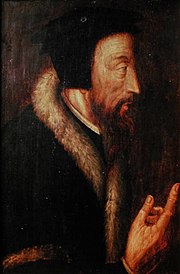
This Friday is Calvin's 500th birthday.
Let us face it. In the world of Protestantdom, we are surrounded and circled around by Calvinists and those he influenced. In my country of birth, Lutherans are not even a blip in the radar. You won't find us much in the city. You will find us in the mountains and remote rural places but not in the urban areas. Luther is only known to handful of Protestant pastors there. If an Evangelical pastor there knows Luther, you can bet he is pretty educated.
There are quite a few wise words that Calvin said that I like. I stress the few (LOL).
Have you read his prayers? I certainly come out impressed by his spirituality whenever I read them.
I was reminded of him when I visited Ichabod who featured a couple of things he said regarding the sacraments in connection to Enthusiasm.
Here is an example from Calvin's Institutes:
We must not suppose that there is some latent virtue inherent in the sacraments by which they, in themselves, confer the gifts of the Holy Spirit upon us, in the same way in which wine is drunk out of a cup, since the only office divinely assigned them is to attest and ratify the benevolence of the Lord towards us; and they avail no farther than accompanied by the Holy Spirit to open our minds and hearts, and make us capable of receiving this testimony, in which various distinguished graces are clearly manifested…They [the sacraments] do not of themselves bestow any grace, but they announce and manifest it, and, like earnests and badges, give a ratification of the gifts which the divine liberality has bestowed upon us.
What did Calvin do in the above quote? He weakened the connection of the Sacraments with the HS. In short, for Calvin, the Sacraments may or may not be accompanied by the HS. For him, there is no guarantee that the HS will accompany the Sacraments for sure, the HS is detached from the Sacraments. I have several theories as to what might be going on in his psyche that led him to say this stuff but that is for another post.
What then is the effect of this detachment or lack of guarantee that the HS is with the Sacraments? You cannot look to it. Calvin's ambeguity has a negative effect on the believer in that he becomes at a loss as to where God's promises are located. He no longer has a guarantee that when he goes there, God will meet him there. Hence, the believer may have to look for a zap from above, and they often do, ergo, Enthusiasm.
At least with Zwingli, it was much better, at least with him, you knew he said the Sacraments were mere symbols. You knew where he stood, and he was wrong. Calvin's vague position I believe has led to the chaos we see in Evangelicalism. This uncertainty as to where the HS works and what He uses to supply what God demands (faith) is like being in a ship that has lost its rudder.
Contrast the above with what the BoC on FC, SD XI says about the matter:
Furthermore, the declaration in John 6:44 is right and true, "No one can come to Me unless the Father who sent Me draws him."However, the Father will not do this without means, but hasordained His Word and Sacraments for this purpose as ordinarymeans and instruments. It is not the will of the Father or ofthe Son that a person should not hear or should despise thepreaching of His Word and wait for the drawing of the Fatherwithout the Word and Sacraments. For the Father draws indeed by the power of His Holy Spirit. However, He works according to His usual way. He works by the hearing of His holy, divine Word. Every poor sinner should therefore attend to the Word, hear it attentively, and not doubt the Father's drawing. For the HolySpirit will be with His Word in His power, and will work by it.That is the Father's drawing. (paragraphs 75-77)
Notice how the BoC leaves nothing uncertain, notice how boldly it asserts the HS is with the Word and the Sacraments. What is the effect of this to the struggling Christian who is in doubt if he has faith? He is assured that he can go to the Word and Sacraments where his faith may be strengthened, increased - he has a guarantee that the HS will meet him there. When he goes to the Word, he is certain, it is God speaking to him. When he goes to the Supper, he is certain, Jesus is pronouncing and giving evidence that his sins have been paid for. Assurance.
Saturday, June 13, 2009
Monica tells...
Calvinists to repent.
I got this from Fighting for the Faith radio.
Don't laugh, pretty soon she may even be calling us too to repent of our ideas about pure doctrine and right theology.
But the way things are going, luckily she does not know we even exist, we are not even a blip in her radar.
Friday, May 22, 2009
Oiler
 There is a name in the maths and physics world that is so famous and so honored, that is the name of Leonhard Euler.
 For some reason in the maths world, it is common practice to name formulas, constants, theorems etc. after him, even though he had no direct involvement in them. However, he did discover quite a good number of them though.
There are a few interesting things about Euler that is relevant to the posts in this blog.
For one thing, he was a believer. He also believed in Biblical inerrancy and engaged in apologetics.
Now it is not known whether or not he was Reformed or was a Lutheran. Assuming he was Reformed and not Lutheran, just to show how he is respected, even the Lutheran Church has a date when they celebrate him. He is listed in their calendar of saints. His day is 24 May.
What can we conclude? If Euler was Reformed, then he would be one of the few people that Lutherans honor from that camp. That is not a small thing, that is saying a lot if you know what I mean!
Lastly, Euler in the course of his life became blind some 15+ years before his death. Yet, even at that, he continued to do his work.
So, what is my excuse? What is yours?
Monday, March 30, 2009
What gets you "in".
By "in" here, I mean "in the faith", "in Christ" and so forth.
When I was in Charismania,
my Arminian teachers warned:
- faith got you in, faith will keep you in.
then I swang to Calvinism and this got transformed to
- grace got you in, grace will keep you in.
None of these gave assurance. I did not find all the above adequate as the first points to me or my faith, while the second points to me again, I am sure that comes as a surprise, correct? The second also points to me because here is the question: did this grace "happen" to me? In effect, did this faith which is a gift of God happen to me? Both point to something in me. Both get me edgy.
My assesment, and I believe is consistent with the Scripture's teaching on the means of grace:
- The Gospel that got you in, is the same Gospel that keeps you in.
The Lutherans Confessions taught me the last one and it points me to the Promise, outside me.
Now, if I could get these Lutherans excited and believe their own doctrine and trust the means of grace...
When I was in Charismania,
my Arminian teachers warned:
- faith got you in, faith will keep you in.
then I swang to Calvinism and this got transformed to
- grace got you in, grace will keep you in.
None of these gave assurance. I did not find all the above adequate as the first points to me or my faith, while the second points to me again, I am sure that comes as a surprise, correct? The second also points to me because here is the question: did this grace "happen" to me? In effect, did this faith which is a gift of God happen to me? Both point to something in me. Both get me edgy.
My assesment, and I believe is consistent with the Scripture's teaching on the means of grace:
- The Gospel that got you in, is the same Gospel that keeps you in.
The Lutherans Confessions taught me the last one and it points me to the Promise, outside me.
Now, if I could get these Lutherans excited and believe their own doctrine and trust the means of grace...
Sunday, February 15, 2009
Final answer to the question...
I wish to thank the dear friends who interacted with me when I asked the question: Did Jesus die for the sin of unbelief?
So to this question, I should answer "YES" and he died for all people including their unbelief.
Now, some have said - Jesus indeed died for the sin of unbelief of the elect, but not the unbelief of the non-elect.
So to my answer "YES", some will reply against it, "well, if he did die for the sin of unbelief of all people, then all should be saved, but why are there people in hell"?.
So the follow up question goes like this, "If Jesus died for unbelief then why are all not saved"?
This line of questioning has similarities to the question - "Why doesn't the month of February have the 30th when in fact April does"?
The question, "If Jesus died for unbelief then why are all not saved", presupposes that simply because Jesus died for all people, then all ought to be saved, but they are not, so Jesus must have died only for those that are.
I have revised my answer to "YES" because of the principle of imputation. Indeed our sins have been imputed to Christ, our unrighteousness has been imputed to him, all of it, but his righteousness only gets imputed to us through the Means of Grace, at the point of faith.
So to the question -"If Jesus died for unbelief then why are all not saved", we say that this misses the nature of imputation.
My answer is based on the imputation of Christ's righteousness, people who are not saved have rejected the gift, and so the imputation of righteousness never happened to them.
So to this question, I should answer "YES" and he died for all people including their unbelief.
Now, some have said - Jesus indeed died for the sin of unbelief of the elect, but not the unbelief of the non-elect.
So to my answer "YES", some will reply against it, "well, if he did die for the sin of unbelief of all people, then all should be saved, but why are there people in hell"?.
So the follow up question goes like this, "If Jesus died for unbelief then why are all not saved"?
This line of questioning has similarities to the question - "Why doesn't the month of February have the 30th when in fact April does"?
The question, "If Jesus died for unbelief then why are all not saved", presupposes that simply because Jesus died for all people, then all ought to be saved, but they are not, so Jesus must have died only for those that are.
I have revised my answer to "YES" because of the principle of imputation. Indeed our sins have been imputed to Christ, our unrighteousness has been imputed to him, all of it, but his righteousness only gets imputed to us through the Means of Grace, at the point of faith.
So to the question -"If Jesus died for unbelief then why are all not saved", we say that this misses the nature of imputation.
My answer is based on the imputation of Christ's righteousness, people who are not saved have rejected the gift, and so the imputation of righteousness never happened to them.
Sunday, February 08, 2009
Thanks for the input but let me clarify...Did the Lord die for...
Thanks to all who have taken the time to help me answer the question, did Jesus die for the sin of unbelief?
I appreciate your time.
However, I am not so sure if the post below have been read with clarity and understanding.
There are a few things to note. I have defined. what I meant by "unbelief" and I equated it with the blasphemy of the Holy Spirit. That is why I answered "no".
This needs to be tackled first. Am I making the equation spurious? Should I equate unbelief with the blaspheming of the Holy Spirit or I should not? Is this a proper equation, are they equivalent or are they not?
Then, secondly while you are there, then you may like to answer the question...
did Jesus die for the sin of blaspheming the Holy Spirit?
Thanks for your thoughts.

I appreciate your time.
However, I am not so sure if the post below have been read with clarity and understanding.
There are a few things to note. I have defined. what I meant by "unbelief" and I equated it with the blasphemy of the Holy Spirit. That is why I answered "no".
This needs to be tackled first. Am I making the equation spurious? Should I equate unbelief with the blaspheming of the Holy Spirit or I should not? Is this a proper equation, are they equivalent or are they not?
Then, secondly while you are there, then you may like to answer the question...
did Jesus die for the sin of blaspheming the Holy Spirit?
Thanks for your thoughts.
Saturday, February 07, 2009
Did Jesus die for the sin of unbelief?
NOTE: This is now obsoleted by the above.
What is the proper answer to this question?
Let me define what "unbelief" means here. The word pertains to the rejection of the Gospel. This is not having doubts but it is an active putting down of the Gospel. So another way of putting it is like this: Did Jesus die for the sin of rejecting the Gospel?
My answer to this question is to say "No". I answer this way because of what I am seing the Bible say - for example the blasphemy of the Holy Spirit is the unpardonable sin, it is rejecting that Jesus is the Messiah and Messiahship pertains to the forgiveness of sins - see Mt 12:31 and Mk 16:16.
I notice that those who come from a Calvinistic background, and those following John Owen's idea of Limited Atonement answers this in the affirmative. So they say "Yes" Jesus died for the sin of rejecting the Gospel because there is no sin that Jesus did not die for; because to say "No" (which the way I would answer the question) means that there is some sin that Jesus left off undone and that would be blasphemous. Jesus died for the sins of the elect (not the sins of the whole world, so they say) and all the sins of the elect have been paid for including - unbelief in the Gospel.
I do not want to go off topic, but I think it really depends on where the blasphemy is being re-directed, i.e. which one is blasphemous? To say Jesus died only for some people in the world or Jesus did not die for the sin of unbelief? I guess this is where we are different from our Reformed brothers/sisters.
The purpose why I posted this essay is so I can be helped in clarifying my own thoughts.
I have answered "No" to this question, but I am not so clear yet if I have adequately accounted for the biblical data. So I like some feedback and proper position of a.) the question and b.) the answer. I hope I could hear some of your thoughts on this.
Here is my additional take on the matter why I answered "No".
NOTE: This is now obsoleted. Click here.
What is the proper answer to this question?
Let me define what "unbelief" means here. The word pertains to the rejection of the Gospel. This is not having doubts but it is an active putting down of the Gospel. So another way of putting it is like this: Did Jesus die for the sin of rejecting the Gospel?
My answer to this question is to say "No". I answer this way because of what I am seing the Bible say - for example the blasphemy of the Holy Spirit is the unpardonable sin, it is rejecting that Jesus is the Messiah and Messiahship pertains to the forgiveness of sins - see Mt 12:31 and Mk 16:16.
I notice that those who come from a Calvinistic background, and those following John Owen's idea of Limited Atonement answers this in the affirmative. So they say "Yes" Jesus died for the sin of rejecting the Gospel because there is no sin that Jesus did not die for; because to say "No" (which the way I would answer the question) means that there is some sin that Jesus left off undone and that would be blasphemous. Jesus died for the sins of the elect (not the sins of the whole world, so they say) and all the sins of the elect have been paid for including - unbelief in the Gospel.
I do not want to go off topic, but I think it really depends on where the blasphemy is being re-directed, i.e. which one is blasphemous? To say Jesus died only for some people in the world or Jesus did not die for the sin of unbelief? I guess this is where we are different from our Reformed brothers/sisters.
The purpose why I posted this essay is so I can be helped in clarifying my own thoughts.
I have answered "No" to this question, but I am not so clear yet if I have adequately accounted for the biblical data. So I like some feedback and proper position of a.) the question and b.) the answer. I hope I could hear some of your thoughts on this.
Here is my additional take on the matter why I answered "No".
- Firstly from the idea of the Means of Grace - Word and Sacrament. This is what God uses to create the condition of faith that receives God's gift of forgiveness. What I mean is that the unbelief in the Gospel is the rejection of the actual giving of the forgiveness of sins as transmitted to us (i.e. delivered to us by God) by God packaged to us by the Word and stated again to us in visible form by God through the elements of water, bread, wine, i.e. the Sacraments. So Jesus died for all of us as people. He also died for us as sinners. This is an accomplished fact. But the delivery of that thing that Jesus accomplished at the Cross is still on going. That is why Paul urges us to be reconciled to God - 2 Cor 5:20. What Jesus did happened in the past, what the H.S. is doing today is to deliver the benefit of that through Word and Sacrament in our here and now, so sinning against the H.S. is rejecting the reconciliation that God is giving to us today. It is rejecting the work of Christ. This is tied to Justification By Faith Alone (JBFA) or Justification Through Faith Alone. Jesus said in Mk 16:16 that those who do not believe (the Gospel) will be condemned. The point I make is that God is still justifying people today, the basis of that justification is the past, but that justification happens in our life time.
- To say "Yes" has several implications: It means that the elect's sin of unbelief in the Gospel has been paid for, hence, even if they abandoned faith, they have been paid for - so this means they are saved and may be saved without faith. This is not JBFA. It really makes faith irrelevant. Further, it makes the Means of Grace of no concern and hence, there is no necessity for it. This is why I think the Lutherans fathers have always claimed that in the end, Calvinism's Limited Atonement effectively denies the Means of Grace. The belief in the Means of Grace - Word/Sacrament encourages faith, a teaching that effectively for example, makes the Sacraments of no consequence, effectively also does not boast faith. Now, one can argue the elect will never abandon faith (what about Heb 6:4)? At any rate, I ask of this position, how does one know he is elect? They answer - through their (perceived) inward change/ or a changed life (I wonder why this is acceptable and that of the Mormon's burning in the bossom's is not). I have not heard from that school answer any other way but for the subjective experience, which for me is not reliable. Lastly I notice with this answer, they also collapse the categories of reconciliation with justification which I am not prone to do.
NOTE: This is now obsoleted. Click here.
Monday, December 08, 2008
Consistency, not enough.
Most people are swayed by apologists who claim that their systematic theology is consistent within itself.
Consistency is appealing to many people. Common sense can detect when statements are contradictory. Apologists would point to the Law of Non-Contradiction, that it is not violated by their theology, and so on and thus it must be true. So laymen are easily sucked up by such propaganda.
Do not get me wrong, consistency is very very important and it must exist in a system. However, it is not enough. It is a necessary condition but it is not sufficient; and this is where the unsuspecting Christian gets rounded up. They get rounded up because they look at consistency syntactically, and not semantically.
When it comes to TRUTH, consistency is not enough. Rather you must demonstrate a world wherein your statements are true (in logic, this is called a model).
Example:
All unicorns are horses that have one horn.
Silver is a unicorn.
Ergo: Silver has one horn.
This is good syllogism, and it is consistent, valid reasoning. But this is not yet true. We must demonstrate there are indeed unicorns. We must demonstrate also there is a unicorn named Silver. So where is that world?
The name calling in Calvinism/Hyper-Calvinism or Arminianism/Hyper-Arminianism etc happening in the Evangelical world hinges on the concept of consistency, but consistency is not enough.
Consistency is good, and it is mandatory, we will not accept any less, but the question with consistency is this - consistent with what? With philosophy or the Bible?
This is where I find Lutheranism different. It has no shame, no insecurity and no sense of guilt when it is not able to answer certain questions. Faith does not always have the answers, it believes what the Scripture promises even when the senses say otherwise.
Consistency is appealing to many people. Common sense can detect when statements are contradictory. Apologists would point to the Law of Non-Contradiction, that it is not violated by their theology, and so on and thus it must be true. So laymen are easily sucked up by such propaganda.
Do not get me wrong, consistency is very very important and it must exist in a system. However, it is not enough. It is a necessary condition but it is not sufficient; and this is where the unsuspecting Christian gets rounded up. They get rounded up because they look at consistency syntactically, and not semantically.
When it comes to TRUTH, consistency is not enough. Rather you must demonstrate a world wherein your statements are true (in logic, this is called a model).
Example:
All unicorns are horses that have one horn.
Silver is a unicorn.
Ergo: Silver has one horn.
This is good syllogism, and it is consistent, valid reasoning. But this is not yet true. We must demonstrate there are indeed unicorns. We must demonstrate also there is a unicorn named Silver. So where is that world?
The name calling in Calvinism/Hyper-Calvinism or Arminianism/Hyper-Arminianism etc happening in the Evangelical world hinges on the concept of consistency, but consistency is not enough.
Consistency is good, and it is mandatory, we will not accept any less, but the question with consistency is this - consistent with what? With philosophy or the Bible?
This is where I find Lutheranism different. It has no shame, no insecurity and no sense of guilt when it is not able to answer certain questions. Faith does not always have the answers, it believes what the Scripture promises even when the senses say otherwise.
Friday, December 05, 2008
Double Jeopardy Doubles as no JBFA
I am still continuing on the rise of Calvinism in Evangelicalism.
The nice thing about the Web is that it has made the world a lot more smaller. With it we can know what is happening in a remote section of the world. So I have been reading on the storm brewing in SBC regarding the subject of Calvinism and the recent John 3:16 Conference last October 2008. Hopefully this does not finally divide the denomination but right now it is a source of controversy. What is controversial is the attaching of the label hyper-calvinist to some Calvinistic promoters within SBC.
More than a year ago, I came to the conclusion that most Calvinists in the popular evangelical scene are really Owenian rather than Calvinian. I mean they are Owenian in their staunch defense of Limited Atonement.
Before I go on, we may need the input of the following in this conversation: JK, who happens to be a Southern Baptist, and David who writes about Calvin and Calvinism.
OK, back to the argument of Owen for Limited Atonement.
John Owen, that revered awesome Puritan theologian, offered the following argument in favor for believing in Limited Atonement:
He puts the universal atonement believer on the stand and asks this question.
But as Pr. Neil Chambers pointed out in his Th M thesis (an acquaintance of mine), Owen's position leads to the elect being justified already at Calvary. Here is what Rev. Chambers' said
Notice I highlighted the portion which is of interest to me. Owenian Limited Atonement therefore leads one to believe that the elect are already justified at the Cross. Therefore that means the elect are justified with out faith. But then, this means that this is not JBFA.
Now does not that sound familiar to you? Does not this Limited Atonement conclusion lead to something we are familiar with and have been discussing for some time (hint look at the few posts below on justification)?
I am amazed and struck at the similarity of conclusion.
The nice thing about the Web is that it has made the world a lot more smaller. With it we can know what is happening in a remote section of the world. So I have been reading on the storm brewing in SBC regarding the subject of Calvinism and the recent John 3:16 Conference last October 2008. Hopefully this does not finally divide the denomination but right now it is a source of controversy. What is controversial is the attaching of the label hyper-calvinist to some Calvinistic promoters within SBC.
More than a year ago, I came to the conclusion that most Calvinists in the popular evangelical scene are really Owenian rather than Calvinian. I mean they are Owenian in their staunch defense of Limited Atonement.
Before I go on, we may need the input of the following in this conversation: JK, who happens to be a Southern Baptist, and David who writes about Calvin and Calvinism.
OK, back to the argument of Owen for Limited Atonement.
John Owen, that revered awesome Puritan theologian, offered the following argument in favor for believing in Limited Atonement:
He puts the universal atonement believer on the stand and asks this question.
You will say, “Because of their unbelief; they will not believe.” But this unbelief, is it a sin, or not? If not, why should they be punished for it? If it be, then Christ underwent the punishment due to it, or not; if so, then why must that hinder them more than their other sins for which he died from partaking of the fruit of his death? If he did not, then did he not die for all their sins? Let them choose which part they will.
But as Pr. Neil Chambers pointed out in his Th M thesis (an acquaintance of mine), Owen's position leads to the elect being justified already at Calvary. Here is what Rev. Chambers' said
What needs to be seen is that Owen’s argument defeats itself by proving too much. If, in Owen’s terms, Christ died for all the sins of some people, the elect, then he must also have died for their unbelief, where ‘died for’ is understood to mean having paid the penalty for all their sins at Calvary. If this is the case, then why are the elect not saved at Calvary? If Owen replies that it is because the benefits of Christ’s death are not yet applied to them, then I would ask what it means for those benefits not to be applied to them? Surely it means that they are unbelieving, and therefore cannot be spoken of as saved. But they cannot be punished for that unbelief, as its penalty has been paid and God, as Owen assures us, will not exact a second penalty for the one offense. If then, even in their unbelief, there is no debt against them, no penalty to be paid, surely they can be described as saved, and saved at Calvary. That being the case, the gospel is reduced to a cipher, a form of informing the saved of their blessed condition.
Notice I highlighted the portion which is of interest to me. Owenian Limited Atonement therefore leads one to believe that the elect are already justified at the Cross. Therefore that means the elect are justified with out faith. But then, this means that this is not JBFA.
Now does not that sound familiar to you? Does not this Limited Atonement conclusion lead to something we are familiar with and have been discussing for some time (hint look at the few posts below on justification)?
I am amazed and struck at the similarity of conclusion.
Monday, December 01, 2008
Reformed - what is up with the 5-pointy things
Them 5-Pointy things.
Sometimes I wonder off in Internet land and I listen to a web cast hosted by a Reformed Baptist. I have been intrigued with this host because each time he introduces his guests, he introduces them with the words... 'a theologically Reformed pastor', 'an evangelically Reformed person' or something like that etc.
Why is it so important for him to let people know that the guest happens to be a 'Reformed' person?
The label "Reformed" is a covetted word nowadays in Evangelicadia.
With the chaos, confusion, disillusionments happening in the Evangelical movement, it is no surprize that people are leaving this movement. The move away is happening specially to university/college kids brought up in Evangelical environment.
It is understandable that they are moving towards Reformed confessions or theology. For after all Evangelicalism is a melting pot which has been fed by several streams. The Reformed movement has some Revivalistic/Puritan streak anyway. Some heroes would be Jonathan Edwards, George Whitefield etc. However there are other sources too like John Wesley, Charles Finney etc. So young people looking for their roots will naturally gravitate to what is closest and semi-familiar. But why?
Well because Evangelicalism has become a faith without a confession. They have these 16 lines in their Statement of Faiths but that is precisely why they are in a mess right now. Anyone who does not attack those 16 points can get away with murder.
Probably the most influential Reformed (Calvinist) preacher today would be Dr. John Piper who actively promotes his 5-pointedness. He is popular amongst young people and they are soaking up his books and sermons.
Well, I have been there, done that, spat the dummy and I gave away the T-shirt.
Young people should stop reading Desiring God and instead pick up the movement's confession and compare it with Scripture. Hopefully they are not in for another bum-steer.
But then again, young people are into fads. What if being Reformed is just another Evangelical fad?
Sometimes I wonder off in Internet land and I listen to a web cast hosted by a Reformed Baptist. I have been intrigued with this host because each time he introduces his guests, he introduces them with the words... 'a theologically Reformed pastor', 'an evangelically Reformed person' or something like that etc.
Why is it so important for him to let people know that the guest happens to be a 'Reformed' person?
The label "Reformed" is a covetted word nowadays in Evangelicadia.
With the chaos, confusion, disillusionments happening in the Evangelical movement, it is no surprize that people are leaving this movement. The move away is happening specially to university/college kids brought up in Evangelical environment.
It is understandable that they are moving towards Reformed confessions or theology. For after all Evangelicalism is a melting pot which has been fed by several streams. The Reformed movement has some Revivalistic/Puritan streak anyway. Some heroes would be Jonathan Edwards, George Whitefield etc. However there are other sources too like John Wesley, Charles Finney etc. So young people looking for their roots will naturally gravitate to what is closest and semi-familiar. But why?
Well because Evangelicalism has become a faith without a confession. They have these 16 lines in their Statement of Faiths but that is precisely why they are in a mess right now. Anyone who does not attack those 16 points can get away with murder.
Probably the most influential Reformed (Calvinist) preacher today would be Dr. John Piper who actively promotes his 5-pointedness. He is popular amongst young people and they are soaking up his books and sermons.
Well, I have been there, done that, spat the dummy and I gave away the T-shirt.
Young people should stop reading Desiring God and instead pick up the movement's confession and compare it with Scripture. Hopefully they are not in for another bum-steer.
But then again, young people are into fads. What if being Reformed is just another Evangelical fad?
Subscribe to:
Posts (Atom)