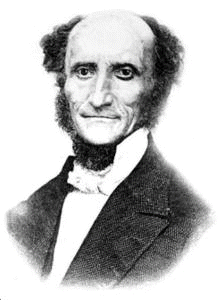
Sunday, August 28, 2011

My crisis of faith (as an atheist)

This is a continuation of an old post How I lost (my atheistic ) religion. So kindly read that post to get a sense of what this post is all about.

In that old post, I shared how I transformed from being an atheist to a theist (but note not yet a Christian). Note that there, I did not abandon atheism because I saw some bad or evil atheists. At university where I became an atheist, I belonged to a philosophy club and in that club there were only two kinds of people, atheists and agnostic, there were no one in between. I aligned with the former because I thought the latter were wussies. Anyway all of them were congenial friends - we hanged out, played chess everyday after lunch, went to talks together etc etc.

Anyway, it was not because of anything that atheists did that made me abandon my atheism, it was because of the external observation of nature or creation and the philosophical truth that something can not come out of nothing, ex nihilo, nihil fit. One might say that this was an incident of general revelation described in Romans 1:19-20. As I said, when I agreed with the assertion "there must be a God", i.e. a Creator, my life became internally disturbed than when I was an atheist. This truth disturbed me and so I went the library and soaked my self with books about other religions and philosophies - they were Confucianism, Taoism, Budhism, and a bit of Hinduism. Note that Christianity was not in the list. I reasoned, no, I will not be satisfied, I owe myself the truth, I must get to the very bottom of this.

All of these religions, as in others, discuss some truth that is conducive and attractive. They all promote moralism etc. I was not satisfied with Confucianism because it did not make sense as to why I should comply with Confucius' idea of a gentleman for its own sake. It did not give authority - for example, he says, we should honor our ancestor. Ok but when you ask Confucius' why? His answer would be - well it is bad, you are not being a good gentleman, so I comeback and say - well so what, what is it to you, why should I follow your dictums, you are not God are you? So his moral pronouncements are not unassailable.

As to the other three, I had a problem with their mystical and vague pronouncements. For example Lao Tsu made mention of The Ultimate Reality but in practical terms, how does one touch that or get a hold of that or relate to that etc.? What did that mean? Such terms I found to be operationally absurd and unfeasible. As to Budhism, well it is a non-Creationist religion and so did not answer my premise of God as being Creator of these things I could see which are bigger than me and too awesome in its beauty and variety. Besides Zen Budhism is just as paradoxical and absurd in its teachings so same thing. Budha wants me to meditate to reach nothingness, a release from my selfishness, and be part of everything etc etc.

So I went back to the Roman Catholicism of my parents, the one that I was brought up in, after graduating from university. I went back to the practices - novenas, masses, confession, penance etc. After a while I would go to confession and the priest would give me my penance, like pray 100 Our Fathers, 50 Hail Mary's etc. I found myself playing a game of doing a deposit of these (i.e., do the penance in advance) so that when I did go to confession, I would deduct my deposit of prayers from the required so I just pray the balance. Why? Because right after doing my religious labour, I was intending to reward myself when I got out, that is paint the town red. I remember going out of church, saying hmmm, paying for my sins seems trivial, I do the penance and it is fixed, but how long do I do this, this is tiring and what if I die in this state? In actuality it was not fixed. One might say, clearly my faith was in those works prescribed by the church.

This went on for a couple of more years and my watching TV got me pegged to a revivalist preacher. He went to my city (in Manila) and one evening I, together with my wife went to the meeting. I did here the Gospel in that meeting some 30 years ago. I can relate more on the few things he said along with his methods which may easily be criticised must be corrected, but that night I did understand the portion on why Jesus died on the Cross, that he died on that Cross as payment for my sins, as a free gift, because I was a sinner never being able to pay for my sins in front of a Holy God. I heard the priest always saying Jesus died, Jesus died, but it was only on that day did I realize, it was for me and my sins. I, along with my wife, left that auditorium, assured that God would accept us not on account of our works but on account of the sacrifice and bitter suffering of His Son.

The journey as you know, those of you familiar with this blog, did not stop there.

With regards to the religions or philosophies I have studied - they bring up pertinent issues but the way they answer the issues leave gaps in between. Below are my summaries and of course I am being simplistic and practical in outlining them here (I can not conduct a treatise on these):

Confucianism lacked authority for its moral precepts whereas Christianity answers that premising the moral precepts from the revelation of God, the ultimate authority and sovereign.

Taoism says we lost equilibrium with the world, with the cosmos and our being; the aim is to practice certain things to capture that equilibrium. Christianity on the other hand surmises that we have no stability because we lost our anchor or relationship with God but He provides Christ to give us peace sending the Holy Spirit in his name. Peace is a by-product of faith in Jesus' Gospel.

Buddhism is correct in identifying selfishness as the source of suffering and advocates meditation as way of saving ourselves from ourselves. Christianity identifies sin as the source of our troubles and the solution is to be forgiven through the suffering of Christ paying for our sins. Christianity teaches that we have a saviour who saves us rather than us doing a doit yourself salvation.

Hinduism, well it has many gods but again, philosophically who and what was the source of such divinity? Christianity on the other hand says there is only one true God, Jesus is his Son and he has won peace for all mankind through his bitter death and suffering. Thus only one God needs to be appeased, such peace, Christ has won freely for every human being and God grants this peace through faith in Christ's name.

Psalm 119:160.

Saturday, July 30, 2011

Old Lutheran Theology of the Cross

Having some down time because of ill health ( I seem to be copping a lot lot of health issues lately), I flipped through my CD stacks and found a CD audio book from the work of Martin Moller (1547-1606) entitled Preparing for Death. It is a series of devotional expositions with prayer at the end of each topic. It is said that this was his contribution to the Lutheran Ars Moriendi (art of dying). I got it many years ago but never bothered to listen, so I decided to lend an ear this time.

I have been researching on this pastor. I am aware he was not without controversy. I do not of course have access to other things he wrote, and so my only source of evaluating him is that CD audio book. My teachers in uni taught me never to rely on secondary sources but this is all I have of him. He was not university trained, but I am so impressed by the richness of his Scripture quotations - with a couple of quotations from Deutero-Canonical books like Sirach and Tobias, here and there. The other that impressed me more was his theme of bringing the reader back to faith, bringing the reader back to the promises found in the Word of God. I often blurt that faith is a problem. I know certainly it is in my life. Jesus recognized this problem in people too. The CD was like good medicine.

Moller's Theology of the Cross does not leave you depressed but in triumphant hope in God. That impressed me. I imagine Moller as a pastor was not only someone who would simply listen to you and that was it, not even exposing his opinion. If what he was came through his work, then I would say he seemed rather the type who would stir up your faith, counselling you by Scripture to hope in God's Word, that might involve either a rebuke or a pat in the right direction.

If the Internet is used as a gauge to judge new Lutherans of today, and if Moller was typical of old Lutherans then, the old Lutherans are quite far in their spiritual life than that of the new Lutherans of today. The old Lutheran Theology of the Cross does not leave you in despair, but that does not seem to come out strong of new Lutherans today.
In this regard, I find the theology of old Lutherans from hymns like this of Samuel Rodigast - Was Gott tut, das ist wohlgetan, Whatever God Ordains is Right (Good) - different on how they carry in life, their Theology of the Cross. Theirs leave you with a smile in the midst of the storm.


Whatever God ordains is good:
This truth remains unshaken:
Though sorrow, need or death be mine,
I shall not be forsaken
I fear no harm,
For with His arm
He shall embrace and shield me;
So to my God I yield me.

Thursday, June 23, 2011

Only for the brave


...and probably for the truthful and the not so fanatical. See the post here.

Thursday, June 09, 2011

Don't bother, we'll just do it ourselves

I am a committee member of my state chapter of the IEEE-CS. Last week, we hosted Mr. Edwin Black, the author of this book to talk about the ethics of technology and how it is important today. Technology can not be ethics neutral and it should not be just a matter of commerce.

Anyway there were a few of us who took the author to dinner. It so happened that I sat beside him and so we chatted a bit. Mr. Black comes from a Jewish background and so my mind went back to the time when I was taking my Religious Studies degree 20 years ago, when one of my subjects was OT Judaism.
As we chatted about the Holocaust, I was reminded by one quip from someone I heard a long time ago of how Jews have abandoned their belief in God due to this tremendous suffering that they have experienced in WWII.

Many people criticize Pentecostalism's wealth and health prosperity doctrine saying that this is a sure fire way of making people atheists. While there is truth to this observation, this is not the only source of why people become atheists. One source is turmoil in life and unspeakable suffering. Life hurts. That quip I heard a long time ago goes along these lines...

"Where were you God when all of these were being done to us? Thanks very much, don't bother, from now one, we will just do it ourselves".

That seems to be the prevailing attitude of Israelis today.

As I thought about this, many statements of Jesus came to my mind as I relate to my own sufferings. For example...

John 16:33
These things I have spoken unto you, that in me ye might have peace. In the world ye shall have tribulation: but be of good cheer; I have overcome the world.

I am glad Jesus said this but I have not fully comprehended all of this. The tribulation part is very obvious; it is the part about being of good cheer because he has overcome the world that I want to learn how.


Sunday, May 22, 2011

If you are reading this

You did not get raptured either.
...
If there is anything to be learned, it is the end of the world --- of false prophecies, hopefully.

Sunday, May 15, 2011

Faith Receives


I was reading my Bible last night and I so happened to be at Acts 10:

how God anointed Jesus of Nazareth with the Holy Spirit and with power, who went about doing good and healing all who were oppressed by the devil, for God was with Him. 39 And we are witnesses of all things which He did both in the land of the Jews and in Jerusalem, whom they[e] killed by hanging on a tree. 40 Him God raised up on the third day, and showed Him openly, 41 not to all the people, but to witnesses chosen before by God, even to us who ate and drank with Him after He arose from the dead. 42 And He commanded us to preach to the people, and to testify that it is He who was ordained by God to be Judge of the living and the dead. 43 To Him all the prophets witness that, through His name, whoever believes in Him will receive remission of sins.”

I was arrested by these words as I recalled how the BoC spoke of how faith receives as well. For example in AC, XX
28] It is only by faith that forgiveness of sins is apprehended, and that, for nothing. 29] And because through faith the Holy Ghost is received, hearts are renewed and endowed with new affections, so as to be able to bring forth good works

So I started to meditate on this for a bit - faith receives, faith receives, faith receives.

Hmm, the object of faith is Christ but what is received is the forgiveness of sins.

My mind went back home and I reminded my self of how in my home culture, whenever there is a wedding, it is customary for the bride and groom to give their guests a small souvenir, a small giveaway so to speak as a token of appreciation of their coming. The above picture is a sample of that.

So how do the guests receive the souvenir? They simply turn up at the wedding - go through and witness the ceremony and eat with the bride and groom. The receiving of the souvenir is the effect of being in the wedding.

I should not stress too far the analogy but in the wedding scenario, the guests focus their attention on the wedding - on the bride and groom but that results in getting a gift. I thought the analogy somehow was appropriate and useful.

Thursday, April 28, 2011

To know the man, ask his wife

This is not me. That is the picture of mathematician and logician Kurt Gödel.

What Einstein did for Physics, Gödel did to Mathematics and Logic.

Gödel identified himself as a baptized Lutheran. Many academics are embarrassed to admit that Gödel might have been a true believer.

When people make claims that Gödel was a secret Christian, people in academia are quick to dismiss and make appeal to his biography how he denied this or that. You see, academia does not allow a man with a great mind to be a Christian as well.

Gödel wrote his mathematical proof for the existence of God. I suspect he did not publish it while he was alive for fear of being persecuted. However, it is in God's good providence that it was kept waiting until he passed away.

I pointed out in some Internet discussion of his Christian leanings and right away I was presented with disclaimer etc. etc.

It is funny that his wife Adele testified that her husband, while alive, would read the Bible every Sunday morning. That is why I said to the nay sayers - hey forget what this professor or official biographer wrote, if you want to know the man, ask his wife.

Lastly Gödel's quoted statements presupposed a Christian understanding of reality.

He said... "I only believe in apriori truths".

Well, where do you find apriori truths? How else if not from God who first declares them? Apriori truths are only found when God defines or declares them.

Sunday, April 17, 2011

Weak on sanctification

And they seem to be proud of it too.

I went to a country church a few Sundays ago. There was a fine elderly gentleman who greeted with me and sat beside me all through the divine service. After the service, they had fellowship over coffee/tea. We got to chat at length and I got the chance to speak to him of my journey. This fine Christian man, now retired used to work for a prominent publishing company. He said he took care of the religious publishing division of the company and he got to read a lot of theological stuff. If I am not mistaken, he even explored for a time, other denominations outside the Lutheran Confessions too. So after hearing of my journey, he asked me with much concern - "do you not consider Lutherans weak on sanctification"? I said, "yes, I do, and I am perplexed by it because you would think that the one strong on justification would have been strong on sanctification too". It seemed my gentleman host has been bothered by this too and did not know what to do with it. See another one bothered about this too.

Over the years, I have heard Lutherans in the Internet proudly said of themselves - weak on sanctification. Mind you they do not say this with shame, they even boast about it. Like one time, I heard a pastor said that when he is amongst some Baptists - the more he would drink beer in front of them, so he could show them how free he is. I suppose the man wants to purposely offend.

1 Cor 10:9 But beware lest somehow this liberty of yours become a stumbling block to those who are weak. 1

It is one thing to admit one is weak on sanctification but sad about it, versus saying one is weak on sanctification and boast about it too. I would say the first one is coming from a repentant heart, the second one I suspect is coming from an anti-nomian bent (either consciously or unconsciously).


Wednesday, March 30, 2011

Can do theology...again

I was bored so I tuned in to a Christian radio station here last night.

It was a litany of teaching one after another of how-tos. There is such a flood of this and the sinful nature in me seemed to have been at ease believing I am such a great guy I can do it in my awesomeness.

What I heard was...How you can do it, how you can have a better life now, how you can be moving forward and upward, how you can be succeesful, how you can rise above like an eagle and hover over those turkeys below etc.

So I am sold that Christianity is about being successful. It is not about trusting God in the middle of sacrifice and suffering. It is about being in the world and being of the world too. It is about having your best life now and having more of it in the next.

That is so so marketable.

I was still bored after listening.

Friday, March 25, 2011

Does this sound familiar?

Church Mouse has been blogging on Rob Bell.

According to Bell...(emphasis mine)

“Heaven is full of forgiven people. Hell is full of forgiven people. Heaven is full of people God loves, whom Jesus died for. Hell is full of forgiven people God loves, whom Jesus died for.” (“Velvet Elvis,” p 146)

I know a lot of people (Waltherians) who will or at least should agree with the bolded words. Except they will say that people in Hell have been indeed forgiven but they are in Hell because they did not accept the forgiveness...etc.

Me: err, hump, so they have been forgiven and have not been forgiven? So now since, the Cross everyone starts forgiven and only gets un-forgiven due to unbelief? What was the first forgiveness for? So there is a second forgiveness? I am confused.

What is happening with Bell? My analysis is that like the others I am protesting against and they hate me for it- he is equating the atonement with justification (which is forgiveness of sins). Since everyone has been atoned for, everyone, so he thinks, has been forgiven.

Monday, March 21, 2011

That is obvious

Of course, any philosophically based religion can easily posit God is Sovereign. There is no genius needed for that, even Islam knows that. That is pure intuition.

In maths, we call that assertion - trivial.

However, that is not the great thesis of Christianity.


Saturday, March 05, 2011

Myths

...I mean myths propagated by some (even so called Lutherans).

  1. That if a Lutheran stresses faith and promotes it, he is being a Calvinist. This misunderstands old Lutheranism. This is the fallacy of false dilemma.
  2. That if a Lutheran stresses faith he must be looking at faith as a form of works. Jesus and St. Paul enjoined people to faith, did they consider faith as a form of works by their admonition to believe? This is the fallacy of a category mistake.
  3. That if a Lutheran stresses faith it will lead him to being robbed of his assurance of salvation. So what is the solution? Promote the doctrine of psycho-quasi Christianized Universalism? More category mistakes and false assumptions.
  4. That a Lutheran's assurance of salvation is never shakeable. Really? Only if he is a Universalist. If it can never be shaken, why would the BoC make you run to the Word and Sacraments?
Food for thought, from Luther's Galatian 4 Sermon...

As before said, they regard faith of slight importance; for they do not understand that it is our sole justifier. To accept as true the record of Christ–this they call faith. The devils have the same sort of faith, but it does not make them godly. Such belief is not Christian faith; no, it is rather deception.

13. In the preceding epistles we have heard that to be a Christian it is not enough simply to believe the story of Christ true–the Cain-like saints possess such faith–but the Christian must without any hesitancy believe himself one to whom grace and mercy are given, and that he has really secured them through baptism or through the Holy Supper. When he so believes, he is free to say of himself: “I am holy, godly and just. I am a child of God, perfectly assured of salvation. Not because of anything in me, not because of my merits or works, am I saved; it is of the pure mercy of God in Christ, poured out upon me.


Thursday, February 10, 2011

Where Walther went off the rails.

I have been reviewing my BoC for my devotions and I have been re-reading some of my annotated portions when I stumbled on something that is making me continue my critique of the statement made by Walther found in the last post, found below.

One of the big difference between Calvinism and orthodox Lutheranism is in the area of the Means of Grace. Ex-Calvinist who become Lutherans hammer on the difference between Calvinism and Lutheranism on the Lord's Supper and this is true.

However, IMHO, the difference starts before that. It really starts on what Lutherans mean by the Means of Grace. Firstly, what do Lutherans mean by this? Well, these are objective means that God uses to create faith and sustain faith in the life of a believing sinner. These are the Word and Sacraments (Baptism and Supper). Lutherans believe (or I think they should) that God, though he is sovereign, has bound himself to these Means for our assurance of salvation.

Talking about God being Sovereign is talking about God in the abstract. Now that Jesus came and we have the Scripture we cannot talk about God in the abstract anymore; because God has made things now concrete, Jesus came, died for our sins, rose again and now seats at the right hand of God.

Yes in the abstract, God can do anything to save a sinner, but now that Jesus has come, we cannot talk now of what God can or cannot do, rather we should talk about what will he do! God won't violate his means, so that we may not be in doubt where we might find him. For if God violates his means of grace, then we are no longer with an anchor as to where we are guaranteed where we may find him. This opens the door to Enthusiasm and mystical experiences.

In Calvinism, for example, they consider reason or the mind as a means. For example, some Calvinists I have read say that God illumines reason and uses it for man to find him. In Lutheran concept, this is not objective and it is not considered by Lutherans to be God's means of grace. Why? Because in Scripture, God is seen by the Lutheran to be binding himself to Word and Sacraments only. In our relationship to God, the Lutheran is not to go anywhere apart from Word and Sacrament to find his forgiveness, which is life and salvation.

Let me now come to the statement of Walther found in the post below.

If Walther was correct, then that baby over there just recently delivered, had his sins already forgiven. Then Dr. Ichabod (and others like him, like the late Pr. Vernon Harley) is correct in his critique and opposition, for this means that God forgives sins without the Means of Grace. Seriously the statement is quasi-universalism.

If God has already forgiven the sins of that baby, then what is the need for the Means of Grace? For Baptism of the baby? None.

Then there is also one thing that is also serious about Walther's words. Walther's statements violate the teaching of the BoC and contradicts it and I quote: Solid Declaration, I (Original Sin).

31] Because of this corruption(original sin), too, the entire corrupt nature of man is accused and condemned by the Law, unless the sin is forgiven for Christ's sake.

The emphasis is mine.

If sins have been forgiven without the Means of Grace why would the BoC say the above quoted text? Waltherian Lutherans in effect have an irrelevant Means of Grace.

Truth is, as far as the BoC is concerned, no one is forgiven unless the Means of Grace has been applied and believed.


Back to the hole.


Tuesday, January 25, 2011

Walther's Synergistic Quote

I thought that I should bring up to people's attention this famous Walther quote (HT. Ichabod) . It seems appropriate to discuss this since Ichabod is featuring Rev. Harley's papers.

I highlighted in bold the synergistic - decision theology presentation found in this quote from the lips of C. F. W. Walther...

"For God has already forgiven you your sins 1800 years ago when He in Christ absolved all men by raising Him after He first had gone into bitter death for them. Only one thing remains on your part so that you also possess the gift. This one thing is—faith. And this brings me to the second part of today's Easter message, in which I now would show you that every man who wants to be saved must accept by faith the general absolution, pronounced 1800 years ago, as an absolution spoken individually to him."

C. F. W. Walther, The Word of His Grace, Sermon Selections, "Christ's Resurrection—The World's Absolution" Lake Mills: Graphic Publishing Company, 1978, p. 233. Mark 16:1-8.
---
Hmmm, so you must accept by faith that you have been absolved and if you do, then you are. Then, if you don't, you ain't.

To quote one of the kids in our clan...Wah???? Wah????

Anyway back to my hole.... see youse later...

Monday, January 17, 2011

Collapsing under stress.

I was reading Genesis 22 the other day.

Then I imagined what if what happened to Abraham, happened to me. What if I was Abraham and God told me to sacrifice my son?

I would probably have my ulcers flare up, and I would probably have fainted under stress.

I wish people would stop trivializing the faith of Bible characters.

What happened to Abraham was not a simple matter, it was a very excruciating experience.

I would have been a nervous wreck if God told me to do something like that.
(I am still offline, I thought I would give something for you to think about).


Friday, December 31, 2010

3rd Use and Last Post

For now.

I have been spending time with my closest family friend. We made our way to Queensland and we encountered towns flooded by the rain, which is another adventure by itself. Anyway we got to talk about Scriptural topics. He is a businessman who has experienced failure and demise and now he is on the comeback. He has been meditating on the Book of Proverbs and have found it a wonderful treasure of God's wisdom, which got us to talking about the 3rd Use of the Law. I have encountered people who know about this use of the Law, it is found in the BoC here. However, though they do lip service on it, it is virtually nothing in their operation of the Christian life. Listen how they speak of the Law, they speak of it as something evil. That is a clue that the person is functioning without the 3rd Use of the Law. The mistake of modern Evangelicals is that though they have the 3rd Use of the Law they tie this up with salvation, hence, pietism. The error of Waltherians (those who follow Walther and Co.) is that due to the emphasis on 2nd Use of the Law, things become virtually antinomian.

Last Post:
Dear friends,

I wish to thank you for your continued use of this blog. I have to attend to pressing duties like facing some trying times. I am facing some heavy artillery fire and need to focus my attention on this. This could be my last post and won't be posting for many days to come. However, I will be commenting in the usual places where you normally find me.

May I say how I appreciated your patronage through this 5 year period of blogging. I would appreciate your prayers for me and my family.

God be with you all.

LPC

Thursday, December 16, 2010

BM on Wedland's 1951 paper.

This was kelmed at Ichabod. The red emphasis are mine, but the rests are BM's.

Brett Meyer has left a new comment on your post "Introduction to WELS DP Beckman's Guilt-Free Saint...":

(W)ELSian Ernst Henry Wendland quotes an appropriate warning, by the Ohio Synod's Kirchenzeitung in its May issue of 1905, to everyone who teaches and defends the false gospel of Universal Objective Justification in his essay, Review of Common Confession Article VI-Justification given to the Biennial WELS Convention at DMLC, New ULM, MN in 1951

Reconciliation and personal justification are thrown together (by Missouri), so that nothing is left of an individual justification by faith. According to Missouri’s new teaching the whole world is justified, in fact, already when Christ completed his work of redemption. A different justification, which takes place when man comes to faith is not present according to this teaching. Thus the central teaching of Scripture and of the Lutheran church is destroyed. (2) According to this new doctrine of justification is already completed without faith, before faith ever enters into the picture. Faith limps behind. Man should only believe in a justification already completed a long time ago. Thus Missouri destroys the Bible teaching of a justification by faith. (3) It is no longer true according to this new doctrine that God first justifies in the moment that a sinner comes to faith. No longer - faith, then justification; rather centuries ago a justification of the whole world - now believe this! We shudder at this sin against everything sacred! God preserve these blinded creatures, who prate so about the clarity of Scripture, and condemn vigourously everything that doesn’t suit their fancy. Now through their own blindness they have fallen so deeply into the night of error! God have mercy upon the poor people who are no longer hearing the central teaching of Scripture, but rather a miserable fallacy, a poor figment of man’s own invention (Lehre u. Wehre, Vol. 51, p. 385 ff.) Page 3

E.H. Wendland goes on to clarify the heart of UOJ and dismisses Missouri's Brief Statement as too ambiguous in regards to declaring the whole unbelieving world forgiven, justified and righteous by God's divine verdict.

"Now we come finally to the Common Confession, where this doctrinal divergence has been supposedly resolved. As we approach it we naturally ask, “Will it contain an unequivocal statement on objectivejustification? Will it rule out the thought that faith is first necessary before any justification of God’s part is possible?”


We read: “By His redemptive work Christ is the propitiation for the sins of the whole world; hence, forgiveness of sin has been secured and provided for all men. (This is often spoken of as objective justification.)”


We readily agree that this first sentence is a statement which sets forth the Scriptural truth of universal redemption. We cannot say that there is anything unscriptural about it, as far as it goes. But we certainly cannot agree with the following parenthetical statement, that this sentence adequately and unequivocally covers objective justification. As a matter of fact, we cannot find the essential characteristic of objective justification mentioned at all, the fact that God “has already declared the whole world to be righteous in Christ” (cf. Brief Statement). “Secured and provided” do not convey the thought of an outright grant, declaring man as acquitted before the bar of God’s justice. Perhaps they can be interpreted in that light by members of the Missouri Synod. But they can just as well be interpreted by the American Lutheran Church to uphold their old position, that although God has secured and provided forgiveness of sin by the redemptive work of Christ, He does not actually justify or declare the sinner to be righteous until the first spark of faith is kindled in his heart. The ambiguity of the Common Confession’s definition of objective justification is so evident that we cannot see how it can be accepted as a final settlement of the old controversy.

"http://www.wlsessays.net/files/WendlandJustification.pdf

Note the new URLs for essays. The old links will not work.
---------------------------------------------------------------------------

ME: Many think that this controversy is rather new. Actually it has been going on for 100 years now. It is interesting that one has to skim through the works of UOJ defenders to mine the quotes of anti-UOJers. The above is an example.

A lot of people consider me a poor soul, someone to be pitied, someone to be sad for, why?... because I have casted my lot against UOJ. Thanks for people's sympathy.

Saturday, December 11, 2010

Gonna Fly Now


I interrupt our regular programming for this fantastic rendition of Gonna Fly Now - theme from Rocky, arranged by Maynard Ferguson and played as a tribute to him.

They say that Maynard may have been the greatest trumpet player of our time. I wonder if Joe would agree.

Thursday, December 09, 2010

Anatomy of a politician

The anatomy of a pastor-politician, that is. I am compiling a list but the ideas here are not original to me, some ideas are from the missus.

  • The approach is sociological, rather than theological.
  • Counselling is psychological rather than doctrinal.
  • Accomodates everyone, opposses no one.
  • Takes the cue from the Synod not from Scripture or the Confessions.
  • Theology is only incidental not intentional.
  • Keeps the gate of status quo.
  • Vague conviction.
  • Sits in between.
  • When challenged to back up his statements with Scripture he asks you if you know Greek. [BM]
  • Unity is based on compromise [GJ]
  • The Vicar of Bray [MH]

If you have something to add let me know.

Seriously, the prophetic pastor who calls you to repent and believe the Gospel is really your friend.

Friday, December 03, 2010

Embouchure, coming back

Seems like. Been practicing again, and I can sense it is coming back. I left my hobby of trumpet playing when I did the doctorate, that was some 6+ years ago. Some part of life seems to be coming back. I took the hobby as a way of relaxing and having a bit of artistic engagement. So I would turn on the CD - play the minus one and belt out a tune from Duke or Chet. It was fun.

Now, I am having a bit of time for it. The missus proded to me to pick up my trumpet again.

This reminds me of my talk last month when I was in Spain attending a conference. I was sitting with a mixture of PhD students and professors all from various countries discussing the idea of doing PhD. We all concluded that one must be a little bit crazy to do this, specially if you do something in the field of mathematical logic or theoretical computing (which I did). You got to be extremely out of your marbles to attempt this. You have to be a bit odd with some loose screws to go through the process of not having a life. Because that is what you are going to experience while you are writing your thesis, you ain't got a life. You may also pass up some opportunities for good employment. That thesis becomes a ball and chain on you.

All of that said, I do feel I got some edumacation.